Episode Transcript
[00:00:04] Speaker A: Hi everybody.
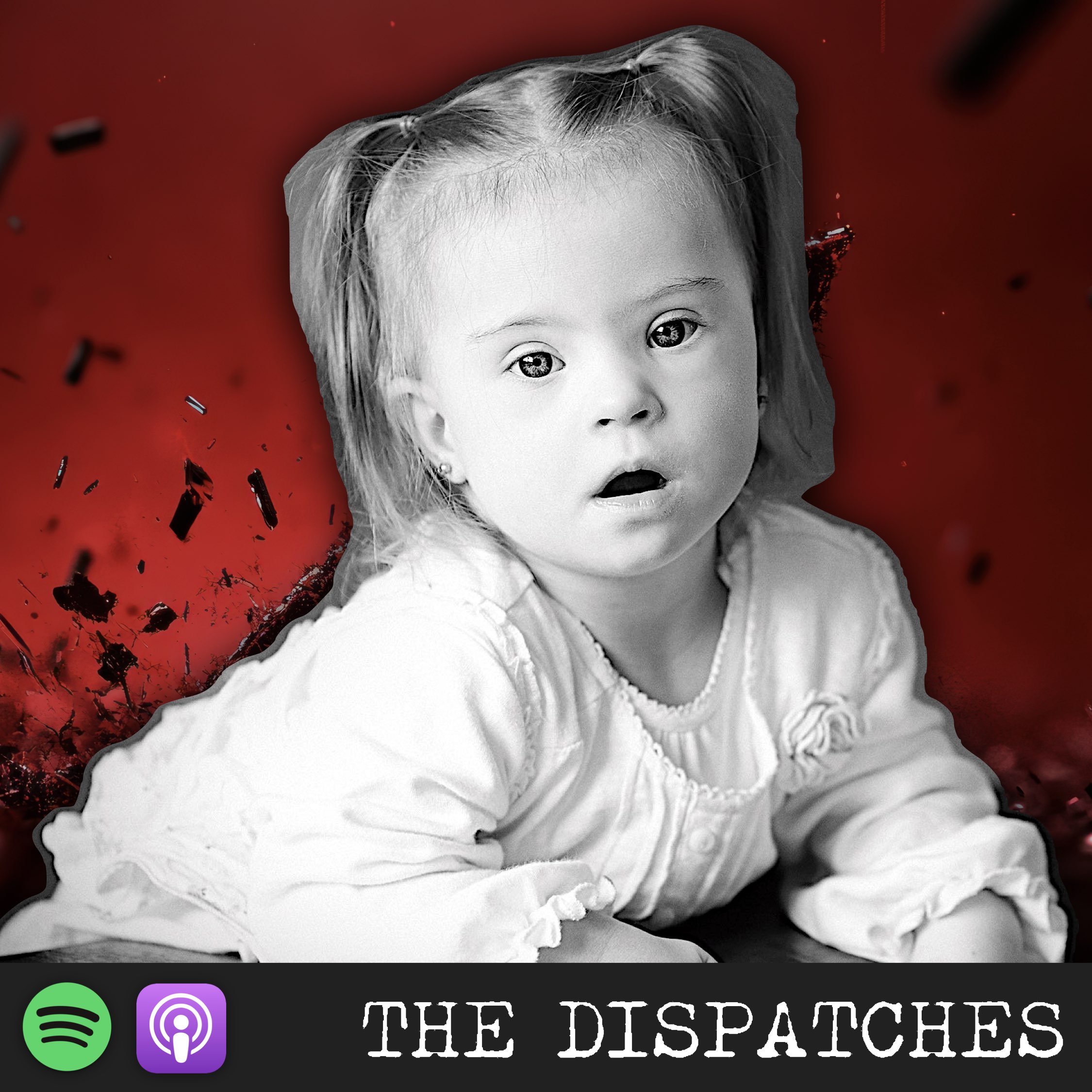
[00:00:04] Speaker B: Welcome along to another episode of the Dispatchers Podcast. My name is Brendan Malone. It is great to be back with you again. And in this episode we're going to be talking about a case which has made headlines earlier this week here in New Zealand about a Kiwi mum who has been able to successfully argue in court that she is entitled to government compensation because instead of having an abortion, she gave birth to a child with down syndrome. We'll talk about that case in a bit more detail because there are five pertinent issues I think that are worthy of our contemplation when I stop and.
[00:00:37] Speaker A: Think about this particular scenario.
[00:00:39] Speaker B: Before I get there though, I just want to say a huge thank you to all of our paid subscribers. Whether you're a paid subscriber on Patreon or on Substack, you can support us on both of those channels.
[00:00:49] Speaker A: For those who are not already paid.
[00:00:50] Speaker B: Subscribers, I just want to say a huge thank you to you though. It's thanks to you that not only are we able to keep producing these podcast episodes, but even, even more importantly, all of our offline work as well is able to keep happening. Your support is going directly into all of the public speaking work that I'm doing, into the pro life events that we run, into the mentoring work, all of the other important offline stuff that we do.
[00:01:14] Speaker A: You are helping to support that directly as well.
[00:01:17] Speaker B: If you're not already a paid subscriber.
[00:01:19] Speaker A: And you want to support our work.
[00:01:20] Speaker B: You can do that on either Patreon or or on Substack. And if you become a paid subscriber, you'll get exclusive subscriber only episodes that only go to our subscribers. You'll also get things like early access to other episodes. So for example, over the next month or so I have three or four different guests, major guests from overseas who are going to be coming on the show that I'm going to be interviewing. And if you are a subscriber, you will get either exclusive portions of those episodes just for you or get you.
[00:01:52] Speaker A: Will get early access to those episodes.
[00:01:55] Speaker B: So if you become a paid subscriber, there are also benefits to you as well. And if you're a paid subscriber on Patreon, then you will get exclusive access to every single episode, whether that's a subscriber only or a free to air episode. You will get exclusive episode on the.
[00:02:15] Speaker A: Sorry, exclusive access Friday morning. You'll get exclusive access on on the.
[00:02:21] Speaker B: Spotify app to both the video and.
[00:02:24] Speaker A: The audio option for each podcast episode. So if you don't want to watch.
[00:02:30] Speaker B: You can just listen and tune in. So plug in your earbuds and go.
[00:02:34] Speaker A: For a bike ride or whatever it is that you want to do. So you've got that exclusive option available to you on Spotify. If you are a patreon subscriber with $5 or more per month.
All of the details are in the.
[00:02:47] Speaker B: Show notes for this episode of or.
[00:02:50] Speaker A: If you're watching already on one of these apps, you can just become a subscriber that way.
[00:02:54] Speaker B: Alrighty, thanks again.
[00:02:56] Speaker A: Let's jump into this episode and I'll explain basically what's happened in this case. We have a mother who was pregnant. She goes and has her scan and.
[00:03:07] Speaker B: The scan does not reveal that there.
[00:03:09] Speaker A: Are any potential issues with her unborn child. She carries on with the pregnancy. The child is born with down syndrome and and then she argues that there.
[00:03:19] Speaker B: Has been a failure here of treatment.
[00:03:22] Speaker A: In her case and therefore she is entitled to compensation. And the judge agrees with her in this district court. Now, initially she goes to the government compensation agency which is known here in New Zealand as acc, the Accident Compensation Corporation, and they turn down her case and they say no, in actual fact, there hasn't been a failure of treatment here.
We ran the typical tests you would run during pregnancy and no down syndrome was detected and so therefore you're not entitled to compensation. She goes to a local district court judge and they say in actual fact, well, the judge in that case says we think you are entitled to compensation. And now the ACC is appealing the case. So let's just jump into this article.
[00:04:06] Speaker B: Which covers this particular story and read.
[00:04:09] Speaker A: A little bit more about the claim that is being made here about why they are arguing about the way they are about this particular case.
[00:04:16] Speaker B: In her claim for cover with acc.
[00:04:18] Speaker A: The woman said she relied on the results of her screening test and the advice of her midwife in deciding to continue the pregnancy and that she would have aborted had she known her baby would have down syndrome. That advice also meant she didn't undertake further diagnostic tests. The corporation that's ACC investigated and interviewed the medical professionals involved in the woman's antenatal healthcare, including her obstetrician and gynecologist, who said her family had no history of chromosomal abnormality and that while a 20 week scan doesn't test for abnormalities, other visual markers weren't identified in this case. So there was no obvious sign here on the 20 week scan that would raise concerns for the wellbeing of the unborn child. A pediatrician also found that she was identified as being low risk for having a baby affected by down syndrome or with the odds being about 1 in 13,000, her midwife reviewed the treatment provided to the woman and considered that given the results of the test, there was no alternative treatment path, and given the.
[00:05:24] Speaker B: Woman'S low risk, there was no reason.
[00:05:27] Speaker A: Why further diagnostic testing would have been considered. Now, she argues in this case that in actual fact they should have done further testing and. And because even though the initial test did not reveal there were any issues at all for the unborn child, that further testing could have revealed that there were issues and therefore somehow she's entitled to compensation because if she had have known, she would have had an abortion. Now, despite the fact that, and this is the first point here to note, despite the fact that the mother has filed this claim as a treatment injury failure for herself and also on behalf of her daughter who was born some months ago or some months after birth, I think it was about six months after birth, if I remember correctly, when she filed the claim in actual fact, when you look at this case, you realize that what's being argued here is not really the injury has been done to the child.
Instead, the argument here is that the injury has been done primarily to the mother.
And what you've got lying behind this particularly pernicious idea is that we are entitled to have children born to perfection, or at the very least, children born to our standard of what constitutes what we deem the ideal child to be.
So in another scenario, for example, you might have a family that says, well, we don't consider down syndrome to be an injury, so we're not going to make a claim, you know, like our vision for what we consider an ideal child to be has been met. And you can imagine other scenarios in which people would have levels for what they deem to be the ideal child. And therefore, if it's not met, an injury has been done. To me, in effect, what you've got here is the child has been reduced to a commodity, to an object, to an instrument. They are an object to. Of someone else's desires that they want to have fulfilled. They are an instrument in someone else's scheme, someone else's plan that they had for their family life. They are a commodity in the sense that they are effectively like there was an idea of what an ideal child that I should receive, should be. And because I didn't get that, somehow a wrong has been done to me. Now, it doesn't necessarily mean that the mother is thinking this way, but that's the reality of what this action. This is how the child ends up acting, actually being treated in the situation.
And our intentions, like whether we intend for that to happen or not is irrelevant in this case. Our actions in pursuing this kind of a claim. That's exactly what's happening here. Effectively, the child is being treated in a similar way as to how you would act or you would. You don't really treat a product in this way, but how you would act if you were purchasing a product and the product was not as advertised, basically. So, you know, buying a car or something like that, and you purchased a car. And, you know, if you buy a car off a dealer, the expectation is that the engine's gonna work, the battery, if it's an electric car, is not gonna explode on you on day one, that it's not gonna leak oil, all those kind of typical things. And if it does, then you would say there has been a failure to deliver the product as advertised or as expected.
And that's really what's going on in this case. So that's the first pertinent thing to note. The human person here is being reduced to an object, to a commodity, to an instrument in someone else's schemes. And because the child was not born according to the desires of the adult, then there is a claim being made here that there has been a failure of treatment, that there's been an injury done that requires compensation. And unfortunately, this particular attitude is very typical and widespread in our culture now, not just in this case, but in lots of other different examples where increasingly what we are seeing is the commodification of human persons. And in this particular area here, we're talking about the commodification of children.
And so children are becoming, effectively property. They're becoming commodities. They are becoming, or they are being treated as the things that are effectively the desires of the adults and what they want out of this scenario of parenting.
And this is not a good situation at all to be in. Children are human persons. They should be received as gifts into our lives, not treated as commodities or properties for us to.
[00:10:11] Speaker A: You know, I guess, have medically produced to.
To own or take ownership of or.
[00:10:18] Speaker B: To try and claim as a right.
[00:10:19] Speaker A: As we see in other scenarios like, effectively, you could probably say here, what's underlying this is someone trying to claim that I have a right to have a child that is free from. And you can insert whatever you think it should be free from. And because I have a child here that was born with down syndrome, my rights have been violated, and I am entitled to claim compensation for what's gone on here.
Second thing to note in this case is that basically you have got an astounding demand here, like the level of control and perfection that is being expected here is completely unrealistic and unobtainable.
[00:11:05] Speaker B: Let's go back to the actual article itself and I'll read a bit more.
[00:11:09] Speaker A: To explain what I mean.
[00:11:11] Speaker B: The woman told the ACC that she accepted the advice given to her by her midwife was correct and that there was an extremely rare chance that the combined screening results could have been wrong. So there's a couple of different screenings that have happened here, and both of them have shown there's no issue.
I believe it was reasonable of me, this is the mother speaking here, to rely on the outcome of this testing when making the decision to continue with this pregnancy. I specifically underwent the combined screening tests to avoid this outcome, which is why I believe it should be covered as a treatment injury.
At the district court earlier this year, where the woman appealed the ACC's decision to decline her coverage, Judge Alison Sinclair noted it was not the woman's view that the screening test had been carried out incorrectly. So it's not that they did something wrong here, but that it returned a false negative reading. And it was on that basis that.
[00:12:13] Speaker A: She had decided not to take a diagnostic test.
[00:12:15] Speaker B: And therefore, also it's on that basis that she is arguing here that she is entitled to compensation, that she's been the victim of something. But this, this is a completely unrealistic level or demand for control and perfection over something like medical treatment in this.
[00:12:37] Speaker A: Case or antenatal care.
[00:12:39] Speaker B: What she's expecting here, I think is absurdly unrealistic. So they ran the screening tests and neither of them showed that there was an issue.
[00:12:49] Speaker A: Her family history did not indicate there would be a problem.
[00:12:52] Speaker B: She was considered a 1 in 13,000 chance of being a mother who would give birth to a child with down syndrome. And despite all of that, she's still claiming that she was the victim of something here.
[00:13:06] Speaker A: The reason why this is happening is, well, it's something we've talked about on a couple of recent episodes, Actually, the podcast, it really goes back to Bacon.
[00:13:15] Speaker B: Francis Bacon, and this whole desire for.
[00:13:18] Speaker A: Control over nature, this whole notion of, you know, knowledge is power. In other words, as Bacon, what he's intending there, what he's meaning there when he says this is that as our knowledge of the natural world grows, our scientific prowess, our understanding of the laws of nature, so will our technology and our control over nature. Our dominance of Nature will grow.
[00:13:41] Speaker B: And so basically what you get is.
[00:13:43] Speaker A: The situation where, you know, we view.
[00:13:46] Speaker B: Nature as being our enslaver and slavery.
[00:13:49] Speaker A: Is not a good thing at all. And so therefore any conquest of nature is a good thing. And we think that we're entitled to have. Well, increasingly now we're seeing this like.
[00:14:00] Speaker B: A total dominion over nature, like it should be able to be bent to.
[00:14:05] Speaker A: Our will, regardless of what our will actually is.
[00:14:07] Speaker B: What we forget, though, in all of this is when we hear the word.
[00:14:10] Speaker A: Nature, we tend to view things far too narrowly. And so we think, oh, yeah, that's our control over plants or animals or maybe the weather, you know, natural forces or disease, stuff like that.
[00:14:23] Speaker B: But what we actually forget is that.
[00:14:25] Speaker A: Human persons are part of nature as well.
[00:14:29] Speaker B: So when we talk about having dominion.
[00:14:30] Speaker A: And power over nature, we are also talking here about the potential to have.
[00:14:34] Speaker B: Dominion over other human persons.
[00:14:36] Speaker A: And this is exactly what C.S.
[00:14:38] Speaker B: Lewis warned about.
[00:14:40] Speaker A: And when he pushes back against this sort of Baconian idea of having total dominance and. And power over nature is he warns that every single one of these powers that we discover over nature will also be a potential power that can be used against human beings as well. So every new power that human beings discover will also be a potential point of dominion over other human beings as.
[00:15:09] Speaker B: Well, where the strong will use that.
[00:15:11] Speaker A: Power and exert themselves over the vulnerable.
[00:15:15] Speaker B: And this is why Lewis argued that it is fundamental that your technology is restrained by moral virtue.
[00:15:21] Speaker A: And that's what you've got going on in this case.
[00:15:23] Speaker B: There is a lack of moral virtue, and instead there is a desire here to exert dominion and control over nature, in this case over other human persons.
[00:15:32] Speaker A: And human outcomes, and also to such.
[00:15:35] Speaker B: A degree that I would call this standard absurd.
[00:15:40] Speaker A: So you have two diagnostic tests that are carried out here, and both of.
[00:15:45] Speaker B: Those tests show that there's no issue.
And there is still an argument being.
[00:15:50] Speaker A: Made that I am entitled or I've been the victim of something here, Something wrong has happened here. There's been a failure of treatment.
[00:15:59] Speaker B: Which brings me to the third point.
[00:16:01] Speaker A: I think that's worthy of considering here.
[00:16:03] Speaker B: Is that there is a growing inability.
[00:16:06] Speaker A: I think it's not just our unwillingness.
[00:16:09] Speaker B: To grapple with suffering. That's been a problem for a while.
[00:16:12] Speaker A: But on the back of our dominion and control over nature, we, I think, are seeing a growing inability to suffer.
[00:16:19] Speaker B: There is a dangerously unrealistic perception of.
[00:16:23] Speaker A: Reality tied up in all of this.
[00:16:25] Speaker B: And it's being falsified and brought about by our advances in technology because Those advances in technology provide us power and. And they also tend to provide comfort often.
[00:16:36] Speaker A: And we now wrongly think that this.
[00:16:39] Speaker B: Artificial way of being in the world.
[00:16:42] Speaker A: That wouldn't be possible without technology is actually now the norm. Like, we think of it as being like the normal way. And as a result, we forget that in actual fact, suffering is part of the human experience.
[00:16:53] Speaker B: And we now have this desire to.
[00:16:56] Speaker A: Exert ourselves in such a way, like.
[00:16:58] Speaker B: Including to the degrees of legalizing euthanasia, where we end the life of a.
[00:17:04] Speaker A: Suffering person instead of actually going with them on that journey or going on that journey ourselves. We don't see anything redemptive and suffering.
[00:17:12] Speaker B: Because we have lost our sacred, transcendent vision of reality.
[00:17:16] Speaker A: We have increasing technology that gives us power and comfort and control and dominion.
And now we are losing our ability to actually navigate the realities of suffering and the realities of suffering.
[00:17:28] Speaker B: And.
[00:17:29] Speaker A: And what's dangerous about that is that leads towards dystopian outcomes. And in this case, I'd argue this is a dystopian outcome. I'll get to that in just a second. But also, it means that we are diminished as human persons because suffering is an essential part of the fullness of the human experience. It is something as awful and as difficult as it is to have to go through suffering, particularly the bigger stuff, it really does shape us in profound ways.
[00:17:56] Speaker B: It matures and deepens us.
[00:17:59] Speaker A: It strengthens our character.
[00:18:02] Speaker B: It's so essential to live a full.
[00:18:04] Speaker A: And flourishing human life, to actually experience suffering. And the problem is here that we have an inability or a growing inability to suffer. And we are increasingly seeing the bar being lowered for what we consider to be a tolerable level of suffering. And I think that that's absolutely at play in all of this. And we sort of have this idea, well, you know, something bad has happened here. I'm entitled to compensation. Now, to be fair, I get it. There are cases that I've heard people make the argument that the reason why we've made these kinds of claims in these specific types of situations is because there is not enough funding and support for people who actually are the parents of children with down syndrome. And I get that argument.
[00:18:50] Speaker B: And.
[00:18:50] Speaker A: And I think that's compelling, and I think that's a whole nother story altogether, because I don't just think it's actually a funding question. I think it's also about how families are able to exist in the world in a situation where they are raising children with disabilities and what that means, like, if we have such a narrow definition of no, you must work. And then you've got to work a million hours each in order to afford to pay the bills and buy a house. Then you can imagine what happens if you have a child with disability in the household that really throws a real spanner in the works. And then on top of that, in the west, we have a massive breakdown in community. And so people are often trying to do this on their own. So I don't actually think it's just as simple as, am I receiving enough funding here. It's community, it's how we view work. It's all of that kind of stuff embroiled in this as well. And I think, again, there is a compelling argument here about what we value as a culture and the fact that we don't actually invest where we should in these situations, and therefore we don't value the lives of people with disabilities in the same way that. That's a compelling argument. And I understand some people make these.
[00:19:52] Speaker B: Kinds of claims here because they feel.
[00:19:56] Speaker A: That they're not getting the support they need.
But leaving that aside, there is still an issue here that underlies this. There's an ethos at play here in making this claim. I'm entitled to be compensated because I experience suffering in my life. That's a very normative idea. Now. Now, I think in some cases that's not an unacceptable idea, but in actual fact, it's not really normative. Throughout most of human history, in fact, 99.999% of human history, we have not viewed the world in this way. And so I think it's worthy of our consideration. What are the full implications when we view the world in this way? And we tend to think of suffering as victimization, suffering as something we were entitled to, compensation.
Which brings me to my next point that I think is worthy of our consideration. In this case, the taxpayer, because that's who's footing the bill here, simply cannot afford to have such an unrealistic standard for compensation claims.
This is really important. Let's go back to the article and I want to read again.
You know, in journalism, they talk about this idea of burying the lead. So some of the most important details are buried right at the bottom of the story. Well, I think that's the case here because you get to the bottom of the story and you read the following.
Now, ACC has successfully been granted leave to appeal. So the ruling has been made that they've got to pay compensation, and they have appealed and they've been granted leave by the courts to appeal and overturn this ruling, and so that they're saying, well, you don't have to pay compensation, and so they're appealing the decision that's trying to force them to pay the compensation. Now, ACC has successfully been granted leave to appeal that ruling from the district court and will take the case up again at the High Court. Early in the new year, ACC's lawyer, Sebastian Bisley, made submissions that the grounds for appeal were was that the screening test was the cause of the decision not to continue with further diagnostic testing. Bisley said the COVID for a treatment injury required a professional standard to not have been met in order for there to be failure to provide treatment. We consider there must have been some indication at the time of the failure that the treatment not provided should have been provided, bisley said in submissions. Unless that approach is taken, it is difficult to see how there could be a relevant failure to provide treatment that caused the personal injury.
The lawyer for the woman and her daughter, Phil Schmidt, told NZME that this wasn't the first case of its kind in terms of COVID for a child with down syndrome, but it was the first case where cover has been granted, where there wasn't a specific treatment failure, but the continuation of the pregnancy was caused by a rare outcome of the treatment, which was a false negative result returned by the screening test.
This is a separate branch of treatment injury where fault is not required, he said. Schmidt said the woman relied on a test result when making a decision to continue with the pregnancy. The case illustrates that patients and health professionals trust these tests as they are very reliable, he said. Every now and again, however, such tests produce an erroneous result, which means that decisions reliant on the test will be wrong.
This can cause injury, as is the case here.
[00:23:45] Speaker B: So, like I said, this is an absurd and unrealistic standard that's being applied here and the taxpayer cannot afford to pay out based on this ethos, this approach to the question of treatment injuries.
There was zero negligent or immoral behaviour that went on here. So it wasn't like they didn't carry out some standard procedure that should have been carried out.
They did what should have been done. It wasn't like there was a moral behaviour here, so someone was sloppy in the way they conducted themselves, or someone acted with deliberate malice and falsified the outcomes of a particular screening or something like that. Neither of those things has been the case here. So no negligence and no immoral behaviour.
What you have here is diagnostic testing which does not reveal. So these two screenings that she underwent does not reveal any issue at all. So you're getting a false negative here, which can happen. There is no way in which you can guarantee that every single test or diagnostic procedure you undergo will produce the correct outcome.
And this has huge implications from my perspective. Anyway, looking at this case like, think about the standard that's being proposed here. You could go for a blood test, for example, and the blood test comes back with a false negative that you don't have, a condition that maybe you do have. If we were to apply this standard now, you have been the victim of something and you're entitled to compensation. The simple truth is that the taxpayer cannot afford this particular approach to determining whether or not someone is actually entitled to compensation. Like I said, this standard is completely unrealistic. But most importantly of all, and this is the dystopian part, and this is really the fundamental thing here after, as I mentioned earlier on, that the child is being treated as a commodity here.
The key point in this case is that abortion is being classified as a treatment.
This is dystopian, because what is being claimed here is that the killing of an unborn child is actually a legitimate form of treatment.
We shouldn't be shocked or surprised by this, because if you treat human persons as commodities, then it's totally fine to dispose of a commodity if you no longer want that commodity.
And abortion itself is predicated on this idea that some lives just don't have value if they are not wanted by their parents. And so this is just an extension of that reality. Euthanasia is another extension of that reality.
Euthanasia is being treated as a form of treatment, as a form of therapy. Now, when it is not, it is the deliberate ending of a human life, and they are not the same things at all.
And it is truly dystopian and destructive to the nature and the humanity of a society. If you adopt and embed at the very heart of your culture this pernicious and evil lie, because that's what it is.
Abortion is not treatment. Abortion is the deliberate ending of a human life.
And if you are now going to treat the deliberate ending of human life as a treatment, don't be surprised if you find lots and lots and lots of other cases where this treatment would actually be beneficial to powerful people.
This is nothing more than eugenics. It is still with us. And this is a prime example of eugenics. Now, again, this might not be what the mother intends in this case, but this action is predicated upon a particular ideology, a particular ethos, a particular anthropology, a way of viewing the human person A way of viewing how we should treat the human person instead of the Christian anthropology at play, which wouldn't tolerate this, because the Christian anthropology recognizes that the human person has profound dignity. Every person, regardless of their status, their age, their state in life, whether or not they have down syndrome, it's irrelevant. They are a human person made in the image of God. They have profound dignity and worth. They are not a commodity.
And it is not ever acceptable to deliberately end the life of another innocent human being. So you can't claim killing as a form of treatment. That is just not true.
This is a dystopian falsehood. This is a Orwellian twisting of language. Treatment is about care and comfort and relief. That's not what's happening here. But again, if you get that first point wrong and you treat a child as a commodity, then all of a sudden you can now start arguing, well, if I don't have an abortion, then my care, my comfort, my relief is not provided.
Instead of recognizing there are two human persons here, we only view one, the more powerful human person.
And basically, we say that their wants and desires are a justification enough to classify the killing of a smaller, more vulnerable human being as a form of treatment. And as I said, this is eugenic in nature because this claim would completely fail if this was a healthy baby that was born without down syndrome. There would be no case here. There would be no claim. Even if someone tried to bring a claim.
[00:29:42] Speaker A: And they said, well, you know, my.
[00:29:44] Speaker B: Midwife did say that abortion was out there, but they didn't really go into enough detail with me. And if they'd gone into much greater detail, or they told me how easy abortion could be, or they told me it would be all fine if I had an abortion. So it's not that the midwife tried to dissuade me, and it's not that they didn't tell me this was, quote.
[00:30:03] Speaker A: Unquote, one of the options available.
[00:30:06] Speaker B: It was that they didn't tell me enough. They didn't give me what I wanted, a level of comfort and satisfaction. And so therefore, I gave birth to a healthy baby and I am the victim of a treatment failure. I have had an injury caused to me here. That case would completely fail. They would say, no, there is no injury here.
The only reason this case is able to proceed is because down syndrome, and a person with down syndrome is being treated as a defect, as an injury.
This is eugenics, pure and simple.
[00:30:43] Speaker A: It is dystopian, it is evil, and.
[00:30:45] Speaker B: It'S still with us despite the mythologies that we tell ourselves about eugenics and.
[00:30:52] Speaker A: About World War II.
So one of the great mythologies of.
[00:30:56] Speaker B: Our age is that eugenics was invented by the Nazis. And the second great mythology associated with that is that with the end of the Nazi regime, eugenics was destroyed. Neither of those things is true. And if you're a regular listener to.
[00:31:12] Speaker A: This podcast, you will know.
[00:31:13] Speaker B: Over the last couple of years, I've documented lots of different examples where eugenics.
[00:31:18] Speaker A: Is still with us today. We or in very recent history, post World War II. Like people, for example, who are able.
[00:31:24] Speaker B: To successfully claim in court in different.
[00:31:27] Speaker A: Countries that they were the victims of eugenic practices well after World War II.
[00:31:32] Speaker B: So it didn't die with the Nazis. And this is a great example of this. It didn't start with them, it wasn't born by them.
[00:31:39] Speaker A: They actually took eugenics to a whole.
[00:31:41] Speaker B: Nother level with their concentration killing camps.
[00:31:44] Speaker A: Which actually wasn't where they started the eugenic program. They had eugenic breeding and sterilization, and.
[00:31:50] Speaker B: Then they had eugenic euthanasia. They were killing people deemed to be defective.
[00:31:54] Speaker A: And that's what's happened in this case.
[00:31:55] Speaker B: This is eugenic in nature.
[00:31:57] Speaker A: And then of course, it ramps up to the concentration camps and they start targeting ethnicity as well.
[00:32:03] Speaker B: Like I said earlier, if you think that killing is a form of treatment.
[00:32:06] Speaker A: Don'T be surprised if people start finding.
[00:32:09] Speaker B: Lots and lots of reasons to actually use that treatment on vulnerable people.
And so the eugenics that the Nazis perpetrated wasn't created by them, it predated them by decades.
[00:32:24] Speaker A: That it predated them and then it didn't die with them.
[00:32:27] Speaker B: And it's still with us today. And that's exactly what this is. And what's even more dystopian about this is just the matter of fact way in which this is just here it's happening, it's being reported upon and presented to the public at large.
And there's no major outcry, there's no major sense of awareness that we shouldn't be doing this.
This is truly dystopian in nature. And as I said, it's the fruit of a failure to respect and to uphold that Christian anthropology that every human person has profound dignity and worth. Because every human person is the imago dei, the image of God. They are a sacred image bearer. And what do you do with sacred images?
[00:33:16] Speaker A: You reverence, respect and care for them. You don't do deliberate harm to them. Thanks for tuning in. Don't forget, live by goodness, truth and.
[00:33:25] Speaker B: Beauty, not by lies, and I'll see you next time on the dispatches.