Episode Transcript
[00:00:00] Speaker A: Foreign.
Welcome along to another episode of the Dispatchers podcast. My name is Brendan Malone. It is great to be back with you again. And today I want to talk About America Fest 2025. For those who don't know, America Fest is the event that is held by Turning Point usa, Charlie Kirk's organization.
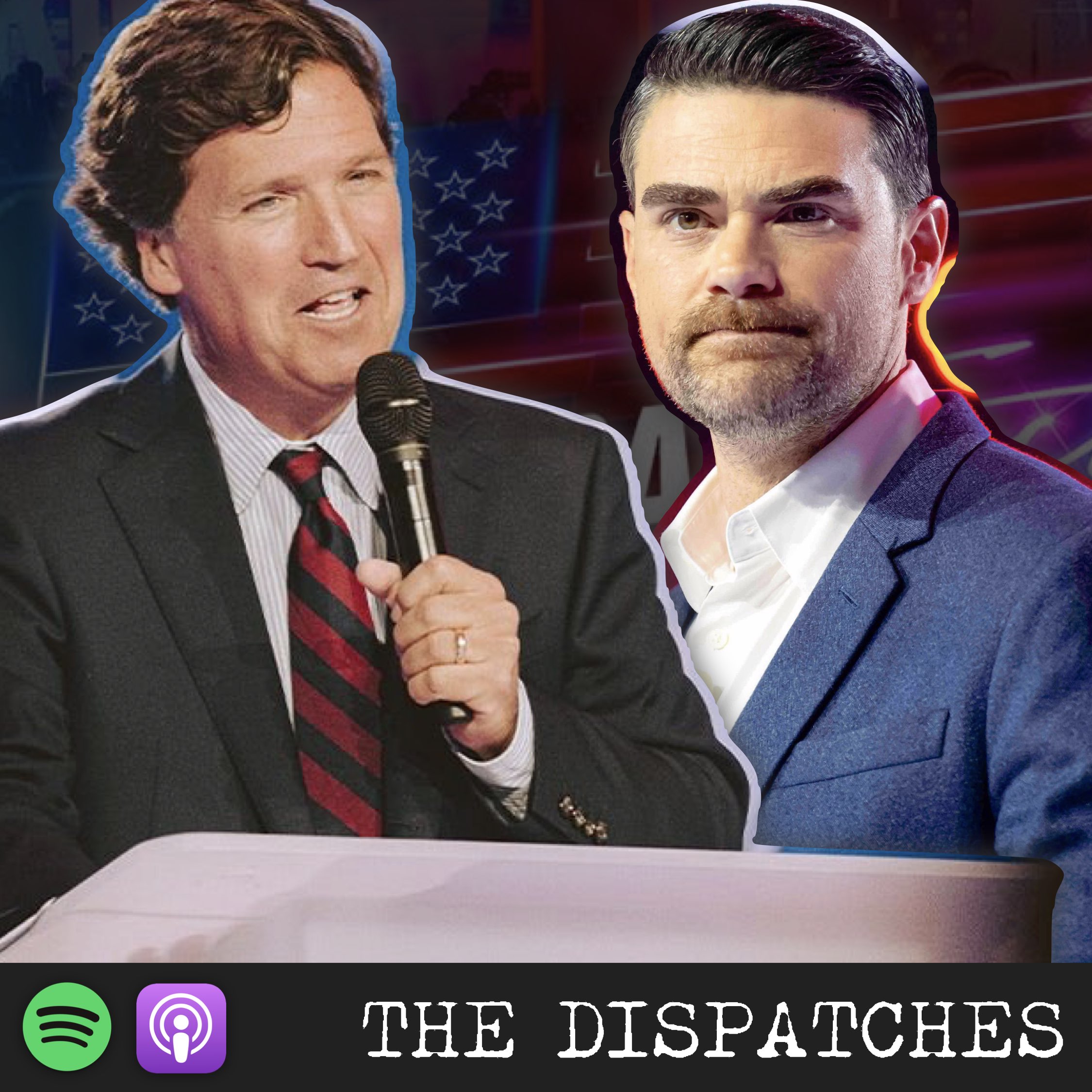
And early on in America Fest, this is just a couple of days ago, Ben Shapiro got up of the Daily Wire fame and he delivered a blistering and very angry at times attack speech where he unflinchingly condemned different characters for their behaviours and what he clearly perceives to be serious moral failings. And there were people mentioned like Nick Fuentes, Candace Owens, Tucker Carlson, Megan Kelly, and as I said, no holds were barred. He just went for it. It was unflinching and as you can imagine, it attracted a lot of attention. I don't want to replay that speech, by the way. This speech comes on the back of a speech that I think, if I understand correctly, he gave at an event maybe a day or so earlier and it was similar in tone or maybe it was just something that was published online a day or so before he gave this speech. But there's sort of two speeches that are doing the rounds that he has delivered where again, no punches pulled. He just unflinchingly condemns dis different people on the right of American politics. And this, as you can imagine, quickly lit up the Internet. And I want to talk about this because I think there is something worthy of consideration here and there are some deeper questions and issues at play in all of this.
First of all, I'm not going to play you Ben Shapiro's speech and this is not me attempting to hide anything from you. You can actually go and see that speech for yourself.
It is available freely and easily accessible online. So please don't take my word for it. Go watch the speech and and you know, take your own sort of musings away from it, if you will.
I am going to play you a portion of Tucker Carlson's response because Tucker Carlson was named and condemned by Ben Shapiro and he responded and I want to play you just a portion, a small portion of a much bigger speech that he gave at this very same event because I think there's some things that Tucker Carlson said that are definitely worthy of our consideration here. But before I get there, I just want to say one of the things I've seen online in response, and this was very quickly after Ben Shapiro had spoken. There was some very high profile and some not so high profile conservatives who were basically sharing his speech or portions of his speech. And there was a consistent refrain that I heard. And people who. These are people who are very, very supportive of what he said. And they were calling this brave and courageous. That's how it was being described. I would have to disagree with that assessment. And I think words do matter. And I think we should ultimately be cautious about how we use words. That's been one of the problems we've had in recent decades where we've had all of this verbal engineering that has led to social engineering. So we should be careful and accurate in our use of words. And courage and bravery, they are specific virtues. They have a meaning. And I don't think this was an example of courage or bravery. I think when people use that phrase to describe Shapiro's speech and what he had to say, I think what they really mean is I really love what Shapiro had to say. So these are people who are very supportive of this and I understand that got no problem. They really like what he has to say because they're on board with what he has to say. But to call it brave is not an accurate reflection. It is not truthful.
First of all, the amount of online support he received from very high profile people, right down to very low profile people tells you that there was not like. It wasn't like he was stepping out on a limb here.
And there wasn't much in the way of support for him. There's a lot of support for the position that he holds. So it's not really something you have to step out on your own and take great risk over. Secondly, he's been making these very same criticisms for quite some time now. In fact, I think we're going on many months now that he has been making these same criticisms of these same people. And I think at times almost on a daily basis. So it's not like there's anything new here. And it's not like he suddenly changed his position either. It's not like he went from being someone who was, you know, really steeped in and supportive of Nick Fuentes or Candace Owens and whatever she's going on. I'll talk about Candace in just a second. I'll share my thoughts on her. For those who are wondering, you know, it's not like all of a sudden he shifted his position radically or, I don't know, he was working for Tucker Carlson and now he's come out and he's condemned what he sees to be Tucker Carlson's grave eras and all that kind of stuff. No, there's nothing really new here. He hasn't shifted his position. He also did this at Turning Point usa, which is a forum where there is kind of an openness to this kind of thing. And he's also going to find a very supportive audience. And also it's fair to say when you listen, and you'll hear this in just a second, when you hear Tucker Carlson's speech, that there's also audience support for positions that are being made on the other side as well. But it's a very safe place to say this kind of thing.
And I think another big factor in all of this for me is there's no real major risk for Ben Shapiro in saying any of this. There's certainly no reputational risk. Like I said, he's been saying these things for quite some time now, and there is absolutely no financial risks for him. There is, if anything, the only potential donor risk here is that he might actually attract more donors. We know, for example, that some donors just before the killing of Charlie Kirk had moved away from giving large sums of financial support to Turning Point USA precisely because Charlie Kirk wasn't as pro Israel as they wanted him to be. And so potentially the only upside here as far as financial things go for Ben Shapiro is there's certainly no risk. It's only potential gains. So all of that said, and the reason why I'm saying this is because it is not true, I don't think to say that that this was courageous or brave. There's not really the requirements here for courage or bravery. And so I think what people are really meaning when they say that kind of thing is I really love what he said here on this major platform. And I think it's important that this is said. And that's fine. That's a position that I know good people on both sides of this. There are good people I know who are really absolutely pro Shapiro's position, and there are people I know who are also good people who are not so keen on. On Shapiro's position here on this issue. So it's not really a question of whether you like it or not. That's irrelevant. But I think we just should be honest in the way we use words. The way we use words does matter. So that's my first observation.
Second observation I'll make is that some of what he said here I don't think is actually particularly coherent. There are things that just so my position is clear. I actually like some of the positions and the principles that Ben Shapiro espouses. The there are other things that he says that I vehemently and strongly disagree with. The same is true, actually for Tucker Carlson. For example, there are things that Taka Carlson says that I agree with, and there are things that he says that I disagree with. And right now, for example, he's talking a lot about this idea of individualism. He talks a lot about the individual, and that is not correct. The authentic conservative position is one which recognizes the communal nature of the human person and prior tradition and prior community as being part of who we are. And certainly what Tucker Carlson is enunciating right now, his individualism is actually not really, or it certainly doesn't sound or seem to be consistent with that. So there are things I disagree with and there are things I agree with, and I think that's the best way to sort of navigate this. But leaving that aside, there are things that Fuentes oh, gosh, that was a Freudian slip. There are.
There are things that. That Shapiro said in his speech that are not actually correct. Like, for example, he clearly implied, and very strongly implied in the way he framed it that Tucker Carlson somehow empowered Nick Fuentes to a level and propelled him to a level simply by interviewing him that he had not previously enjoyed. And I just don't think that that is an accurate accounting of things at all.
Taka Kausen didn't get give anything major in the way of a boost to Nick Fuentes. Like, Nick Fuentes already has a large audience. He has a large following. And that in and of itself should cause serious people to stop and say, well, why is that Something is going on here and he is attracting people.
One answer is, possibly he's just got charisma and nothing more. And that's a very dangerous thing. Charisma with, you know, coupled with evil ideas. So some would argue that point. I think it's a combination of the fact that he does have a certain charisma. And also there is an entire generation of young people now who know that what has been going on, particularly with liberalism and the fruits of liberalism, they are really the destructive inheritors or they've inherited the destruction of liberalism and they're just so fed up with it, they are looking for people who are going to be more honest in their assessments. So I think there's a couple of factors sort of at play here.
But he has a huge following. He had a huge following prior to the Tucker Carlson interview. He has streams that attract a massive audience.
It's not like all of a sudden, Tucker brought him back from the wilderness. This is a guy who has been one of the most cancelled online people in history, if not the most cancelled.
He has been subject to so many different forms of cancellation, and he is.
Cancellation. That's not a word, is it? Cancellation attempts or different, you know, deplatformings, and some pretty major ones, too. And yet not only has he survived, but he has grown his audience base. So this is not a guy who was desperately dependent on Tucker Carlson to elevate him. So it's not clear to me how Tucker has done much for Nick Fuente simply by having him on a show to have a conversation and. And especially in light of what's happened since then, because Nick Fuentes has just come out after this and it didn't take him long, just a couple of weeks, and he's sort of harshly criticizing Tucker Carlson again. He's back to that sort of enemy status that they were sort of the relationship they had previously. He also, in his speech, Shapiro, that is, attacked Daryl Cooper, who is a historian who goes by the name of Martyr Maid. And he attacks Daryl Cooper, I think, because Daryl Cooper was interviewed and he made a statement which I don't think is actually historically accurate and is something that I think rightly, people should push back on. It's hyperbole. And the statement he made was that Churchill, Winston Churchill, was the villain of World War II. That's not correct at all. But in saying that and what I've seen in a lot of the pushback to that, and by the way, this is, I think from what I understand, Daryl Cooper has acknowledged that he was. This was sort of him in a particular platform setting where he was, you know, being interviewed by Tucker. He was being more hyperbolic in his speech, but he was sort of trying to make another point. Regardless, I think it wasn't a. It's not accurate, it's not true. Let's just be upfront about that. And I don't think it was the best way to phrase it either. But regardless of that fact, I think when you encounter something like that, what you should do is you should push back and explain. And I think some people have done that well, and, and they've pointed the, you know, they've stated their points of disagreement. But here's the other thing I've seen. I've seen people pushing back against that who have presented, again, an impression or ideas about World War II that are more mythology than they are accurate. World War II is a complex event, and I mean, not just all the moving parts and what happened, like historically, chronologically, and, you know, all of the players, complex. It's also morally complex and there are events in the way they unfolded. They have a certain complexity to them. So often you see people flattening things down to a way that doesn't really reflect the complexity.
So Neville Chamberlain, for example, is presented as this example sort of par excellence of moral cowardice and capitulation. But in actual fact, if you know your history, and this is why you should read history, you know that that's not correct at all.
It's not that simple. Chamberlain was someone who understood the very difficult position that England was in. They weren't actually in a position in that moment to actually fight a war with Hitler. So that's a factor in all of this. Secondly, it was clear that the people and the leadership of England wanted there to be peace. They didn't want another war on the back of a previous world war. And in fact, to such a degree that when Chamberlain came home, he was received as a hero by the people of England. When they thought initially that he had managed to secure peace and avoid another war with Germany. In fact, the adulation was such that he was given an honour that not many people actually were ever allowed. And that was. He was. The king allowed him to ride in his own vehicle to be greeted by the people after he returns to England. So this idea that somehow he was this sort of lone, cowardly sort of guy who just wanted to capitulate to evil and surrender in the face of it, and now he has become the. The stereotype of, the archetype of that, and it's. It's much more complex than that, is the point I'm trying to make. There's the moral complexity. Well, not really moral complexity. There's the moral reality of Hiroshima and the fact that the Allies, that's our side, dropped atomic weapons on primarily non combatants, on elderly men, on women and children, and there is no moral justification. I'm sorry, there just isn't for what happened there. But we've created a mythology around that and that mythology now is historically challenged by new facts that we know.
As you know, time has moved on. We know a lot more. A lot more declassified documents and we understand a lot more about what happened there.
There is the alliance we formed with Stalin. I'm just giving examples here to show the moral complexity in all of this. Basically, there is the alliance we formed with Stalin's.
Stalin. Sorry, Stalin.
It's the end of the year. My words are becoming vague and clearly I am not ending them as I should. Apologies.
But the alliance that we Formed with Stalin. Stalin is a mass murderer, a genocidal mass murderer.
And the estimates about how many people he killed, the upper estimates, there is disagreement amongst historians depending on how you consider and count the fatalities.
But the higher end estimates, the upper end estimate about the maximum number of deaths that Stalin, the genocidal mass murderer is responsible for would put him at a killing toll that is three times higher than what Hitler's upper end. So Hitler's upper end is about 20 million. Some believe Stalin should be considered to be responsible for around 60 million. The more conservative upper end estimate puts him around 20 million also. So he's on a par with Adolf Hitler.
Not just that, but towards the end he was actually planning his own genocidal pogrom of the Jews. Thankfully he died before that could be full realised. Because the reality is the way Stalin was and the way communism was, that could have been far worse even than what Hitler did to the Jews.
So what I'm saying here is that we allied ourselves with a genocidal mass murderer to fight another genocidal mass murderer. And that genocidal mass murderer. This is the other thing we tell ourselves, this mythology, that if it wasn't for America entering the war, we wouldn't have won the war. But in actual fact, it's pretty clear that it's Russia who was overwhelmingly responsible for us winning the war. The death toll that Russia paid was higher than any other nation.
And so we've got this seriously complex situation where we allied ourselves with a genocidal mass murderer who was as bad, if not worse than the genocidal mass murderer we were fighting against.
And if it wasn't for that alliance, we wouldn't have won the war. And as a result of that alliance, Stalin was then able to take control of large amounts of territory after the war and execut his own horrifically authoritarian and tyrannical evil on a whole other group of innocent people that he wasn't doing that to previously. We could talk about the Nazi scientists after World War II and what happened there.
There's so much that we could talk about and the complexity, the moral complexity of this, but we don't really do that. We tend to get this mythology, good guys versus bad guys, and it was all very black and white. In actual fact, it's not really like that.
And Daryl Cooper is someone who really probes at the grayness of this. And like I said, it is not historically accurate to call Churchill the villain of World War II. That is not, that is absolutely not fair. But here's the thing about that idea, that is not a new idea. It's something people have been writing about, like recognized thought leaders, you know, decades ago, have published works, for example, I've read them where they were making these kinds of arguments about Churchill and his failings.
And so there's nothing really new in what Daryl Cooper is saying, but obviously that became a real point of contention and it's something that, you know, Shapiro refers back to.
The thing for me about Shapiro's speech is, ironically, I said, don't take my word for it, go and listen to it for yourself. Because my take is this, that, that, like, there's an irony in this. Shapiro actually sounded an awful lot like he was policing other people. And why I see irony in that is because he and others have been talking about this whole thing they call horseshoe theory. And this idea of the woke right. You've heard my views on this before. The woke right is not a real thing. It's a confusion. It's an ontological, metaphysical confusion. When you say woke right, you are confusing behavior traits with ideological beliefs. The woke left is the woke left because they have a particular set of ideological beliefs.
The woke right people calling people on the right side woke, they're referring to behaviour traits. And ironically, those same behaviour traits also exist within liberalism. It's a way for liberalism to desperately try and crib back ground that it's lost in recent years. And it's really sort of a turf war, if nothing else. But the irony is that Shapiro actually sounded like one of the woke right sort of caricatures, if you like, that he has, you know, he's been party to really promoting, because here he is policing others and making demands that I'm sort of not really clear on. Like, what does it actually mean when you say that someone like Tucker Carlson should denounce someone he's hosted on his show for a conversation?
Like, in my mind, I don't understand what that actually is supposed to look like. Or when you criticise someone for not being hard enough on another person in an interview.
I'm not quite clear what exactly it is that you're looking for here. Tucker Carlson has a conversation with someone on his show.
That's what it is. And what I think Shapiro would be like, better off doing is critiquing and critiquing with rationality and with calmness, the disagreement points that he has. Like, he should be critiquing not. Not with Tucker, but with someone like Fuentes, he should be critiquing Nick Fuentes and his commitment to anti Semitism, which is evil, and he should rightly be critiquing that. That's where the criticism should be. But denouncing Tucker Carlson, I kind of don't get it. Now, in response to all of this, so that's just some of my thoughts. But in response to all of this, Tucker Carlson then gave his own speech. And I want us now to listen to, not the whole speech. The speech is almost 40 minutes long. But I only want us to listen to the first six minutes or so of Tucker Carlson's response, and then I want to share my thoughts about it. Because I think, to me, there's some more interesting meat on the bones in this speech. Like I said, I'm not trying to hide anything from you. Go and watch Ben Shapiro's speech for yourself. You know, you can see for yourself what he's actually had to say. And you can judge, you know, and make your own assessments about that. I'm not trying to hide anything here by only just showing this one side. This is just for brevity and ensuring that this isn't a really long episode. And so I really want to focus in on the response because I think some important points are raised. And then I want to share, just to conclude with some concluding thoughts of my own about all of this, because I think there's some other things that we should think about beyond just the back and forth that's gone on at America Feast here between these warring parties and the speeches that they've made. So let's watch. Now, Tucker Carlson's, or the initial. The first six minutes of Tucker Carlson's response.
I just.
[00:21:04] Speaker B: I just got here and I feel like I missed the first part of the program. Hope I didn't miss anything meaningful, but I just want to say I don't think I did.
No, I'm just kidding.
I watched it.
I laughed.
I laughed. That kind of bitter, sardonic laugh that emerges from you and like, upside down world arrives when your dog starts doing your taxes and you're like, wait, it's not supposed to work this way to hear calls for, like, de platforming and denouncing people at a Charlie Kirk event. I'm like, what? This is hilarious.
Yeah, this is hilarious. Actually, one of the clips, I was listening to myself thinking, as I often do when I hear myself speak, which is never because I never watch myself. But at these events, they always play, like, the role of you. And I'm like, that guy is pompous.
Sorry about that. We don't see ourselves clearly.
But the Prediction that, you know, at some point when Republicans took power again, which I did everything I could, you know, to help, and really felt that was important. I still think, you know, I was right, but I really thought that the impulse to de platform people, or even to use the word platform as a verb, which it's not.
It's a noun. Don't steal my nouns.
De platform and denounce. Why haven't you denounced somebody else? The whole, like, Red Guard, cultural Revolution thing that we so hated and feared on the left that we did everything we could to usher in a new time where you could have an actual debate. I mean, this kind of was the whole point of Charlie Kirk's public life.
And I think that.
I think that he died for it. I really believe that, and I know a lot about it, because the last several months of Charlie's life were devoted in part to arguing about this event. In fact, this speech. In fact, my speech here, which he asked me to do earlier this year, this summer, and was immediately put under just immense pressure from people who give money to Turning Point, I would assume good people, but who wanted him to take me off the roster. And this has all become public, and I. The whole thing is so sad that I never talk about it, except to say Charlie stood firm in his often stated and deeply held belief that. That people should be able to debate and that if you have something valid to say, if you're telling the truth, you ought to be able to explain it calmly and in detail to people who don't agree with you. And that you shouldn't immediately resort to shut up, racist.
You shouldn't immediately go to motive.
By the way, shut up, racist is the number one reason I voted for Donald Trump, and because it's just sick of it. I mean, first of all, if I was a racist, if I was a bigot, I would just say so, okay? It's America. You're allowed to be whatever kind of person you want. I'm not. I'm sincerely opposed. Have always been and will always be.
But the style of debate where you prevent the other side from talking or being heard because you immediately go to motive. Well, I wonder why you're asking that question.
I wonder why. Why are you asking that question? I detect in the question a certain evil in your soul.
And everyone listening should know that listening to you implicates them and that they someday may be asked to denounce you.
And that friendship is not a reason to defend someone.
Love is no defense.
I kind of thought we'd reached the end of that. And as far as I'm concerned, we have. And I'm not going to play by those rules.
I'm not going to engage in that.
If someone doesn't like what I think, fine with me, as long as I get to express it. That's my view. But since we're on the topic, I think I should take the opportunity to explain why Charlie was under all this pressure. And I. And I think Erica, who I just saw backstage and whom I love and who I can tell you is totally committed to continuing the core principle of Charlie's public life, which is the right of every person to express what he believes that is rooted in Christian faith. We believe people should be able to say what they think because they have souls.
They're human beings created by God. They are not slaves. They are not animals. They are not objects. You cannot tell another human being to shut up, even shut up, racist, because you don't own him.
He is an independent, autonomous person created by God as an individual. Okay? So that's where that belief comes from. That's where free speech comes from. And there's no accident. This is the only country in the world that protects it. Because our founding documents were informed, as you just heard so nicely expressed by Michael Knowles, my friend, by people who self consciously incorporated Christian precepts into their structure of government.
So Charlie was committed to that, but they, the people around him were like, you can't. Because it's not that. Carlson's wrong.
My only point was I don't want to land war with Iran.
I got over my skis and said I didn't want another regime change war with Iran, rather than explain why we should have a regime change war with Iran, which I'd be happy to listen to. He's an anti Semite. He's an anti Semite. Which I said, well, obviously that's not true. And Charlie said, I know.
[00:26:32] Speaker A: And.
[00:26:33] Speaker B: And then it just didn't stop. So I continued to say, I'm not an anti Semite. We don't care what you say. You're lying. You are.
So let me just affirm one final time. Not only am I not an anti Semite and would say so if I was, I'm not an anti Semite for a very specific reason. Not because it's unpopular or my donors don't like it. I don't have any donors.
I'm not an anti Semite because anti Semitism is immoral in my religion.
It is immoral to hate people for how they were born, period.
[00:27:10] Speaker A: So there you Go. That's Tucker Carlson's response to being Shapiro. And please don't take my word for it. Go and watch Ben's speech as well and watch all of Tucker Carlson speech. He goes on from there to elaborate on some of these points even further. But I think this gives us the good summary of what he was or his reaction in response to it. And I think there's some important things in here that Tucker Carlson has said that are absolutely worthy of consideration. But before we do that again, I just wanna make the point. I'm not trying to present a censored version of events or misrepresent anything. Go and watch Ben's speech for yourself and make your own assessment of it.
The thing that I think that really stuck out to me or one of the key things, there's several things, but one of the key things that really stuck out to me in Tucker's response is when he talked about the importance of friendship. And he's absolutely right.
Ben Shapiro, I think was wrong to target Megan Kelly. It's one thing to say, well, I'm gonna angrily denounce someone like Nick Fuentes, I understand that, or Candace Owens. We'll talk about these people in a second. For those who are wondering my take on all of this, particularly Candace Owens, I'll share my thoughts in just a second. But basically Megan Kelly is someone like he said in his speech, this has been Shapiro, that he considers her to be a friend. And then he went on to effectively and very strongly insinuate that she was a coward, she was a moral coward.
I'm sorry, but that is not how you treat friends. If you truly are friend to someone, you do not do this kind of thing publicly to them.
This is not authentic friendship. It is not authentic conservatism. It certainly is not a representation of a good moral vision of reality given to us by Christianity. This is cheap, reactive, political point scoring. Friendship matters.
And one of the things that should drive us all insane is around this time of year, particularly Christmas in America, Thanksgiving, you know, Independence Day, whenever you have a major holiday, you get this slew of articles from the progressive side talking about not inviting families over to gather together because of their political views and not, you know, how do you handle that conversation and how do you shut them down and should I go to Thanksgiving Day dinner and all that kind of nonsense.
And so this is a destructive and anti humane response. It's not friendship. It is not authentic friendship at all. And we need to get our head around that because this is extremely destructive. And so For Ben to say, well, this person's my friend. But now I'm going to insinuate strongly at a very public forum I am going to get up and denounce them and claim that they are a moral coward simply because they haven't done anything worthy of this. By the way, it's simply because Megan Kelly has not taken enough of an anti Candace Owens position. He does not consider her position to be considerably anti Candice enough.
And because she hasn't taken the position that he deems to be the correct one on being anti Candace Owens. She's not pro, by the way, she's just taken a position of, well, I'm a sort of neutral sort of questioner of these events and I'm a neutral questioner of Candice.
Like I'm not here to be a denouncer. Now you can think what you will about that, but to say that that is that sort of a position somehow makes you worthy. If supposedly you are friends with this person of their public condemnation, I'm sorry, then you are not a true friend to that person and friendship actually does matter and it should be something that we foster and work hard on. And I really believe this. Like I was thinking in preparation for this episode about this concept and I was think, yeah, the people that I really am friends with, the people that I call friends, it is actually the moral and right thing to engage with them and to speak with them privately and personally about issues that you have. And there are very few examples, in fact, I think they are so few as to be practically non existent whereby you would actually have good reason to publicly denounce someone who you had previously claimed was a friend.
And so this sort of behaviour is not good and I think Tucker is right to actually call this out.
Why is this happening though?
Here's my take on this. I think that there are good arguments on both sides of what's going on here. These issues that keep cropping up and there's one or two issues that this really all centres around.
And I think that there are good arguments being made on both sides apart from, let me say this big. Apart from I did promise I would share my thoughts on this Candace Owens. Candace Owens is all over the map. She's not someone that I watch. I don't even know what to make of Candace Owens, quite frankly.
I go out of my. I don't go out of my way but I just, I avoid her content and the only time I see it is when it crops up on my feed because other people are sharing it to either go, this is amazing, or more commonly they're reacting negatively to it. But that's the only time I see her content. I don't watch her, I'm not a follower of hers. And quite frankly the stuff I've seen lately seems just to be all over the map and I don't know what to make of it. Is it a grift?
Is she someone who genuinely believes this and has very delusional ideas about things? Is she someone who's sort of partially seen things and then there's inserted a whole lot of crazy conspiracies into it? I, I don't know what to make of it. I'm not really interested and I don't watch her content. So I put her in a whole different category altogether. But there are people like for example in this situation, I'm thinking here of Ben Shapiro and then someone like, say Tucker Carlson or someone like Megan Kelly. And that's the sides I'm thinking of here. Good arguments are being made on both sides and also I think things that I disagree with, arguments I wouldn't agree with are being made on both sides as well.
And I think an authentically conservative position is to actually just sort of charitably navigate and thread that needle the complexity of human affairs and human conversation and human interactions and human disagreements. But I think one of the things that makes that so hard now is the reactive and practically psychopathic nature of social media. It just wants us to be psychotic and it wants us to react and it wants us to constantly be on edge and, and that sort of the animal brain rather than the human brain reacting to everything it wants. Animalistic urge based reactivity. That's what social media rewards. And also there's this whole thing of influencer culture now people have built like for themselves entire reputations and industries and money making machines on the back of reactionary influencer culture. And none of that is helping this at all. But there is still a deeper question of like, well, why is this happening? Why, why would Ben Shapiro, for example, someone who is, I think has a very coherent take on other issues. And as I said, there's some things I strongly disagree with him about. But he is an otherwise an intelligent man, even with points I disagree with him on.
He's not a dummy, he's not a slouch, an intellectual slouch here at all.
So why would he get up and do this in America Fest? Now some are saying that this is actually about a much bigger battle that's going on for the heart and soul of the Republican Party post Donald Trump. I've talked about that on previous episodes, and I think there's possibly a bit of truth to that. There is a desperate attempt by those who are sometimes called neocons. There are those who are in the really staunchly pro, like what has sometimes been called now the Israel first conservative movement, that they, they really want to wrestle control of the Republican Party back in the post Trump era. And so some are claiming this is part of that. This is all part of the, this is like almost like kabuki theatre that is designed as part of the ongoing strategy to try and win more support over to their side of the cause. I actually don't think we need to really think that deeply. I don't know if there is as much 4D chess going on here when Ben Shapiro got up and delivered his scathing rebuke of people.
I don't know if it's quite that complex.
I think of. And if you've been listening to my podcast for a while or heard me speaking in public, you will know that I think that Rene Girard, the great Catholic anthropological philosopher, stumbled upon something important when he saw within human society this constant scapegoating that goes on. And how we scapegoat people. We blame them and then we push them out of the community, or previously we might have even sacrificed them and killed them in some way to try and restore orders. And he sees this as a constant cycle and it's only Christianity because of Christ that this is completely upended and disrupted and destroyed because Christ calls us into the role of imitating him as the ultimate scapegoat, the ultimate victim who actually doesn't hate his enemies and doesn't seek revenge and doesn't scapegoat, but he gives of himself in total self giving love. And then we're called to do the same sort of thing if we're followers of his. And so Renee Girard, this is a conversion point for him. This converts into Christianity because he, he sees in this something profound and radical that's never been in society before. But one of the things that Rene Girard talked about is basically what you have is as people become or groups or this could be nations or any group or individual as they become more and more similar. What happens is eventually a sort of like a power struggle starts to ensue and then they will try and find ways to separate themselves to, to regain power, if you like, by, by separating themselves and pointing out difference and trying to scapegoat the other in order to Secure, again, a position of dominance. And I think there's something of this happening in this.
Like, I. I think what's going on with Ben Shapiro is that, like, it's. As I said, Candace Owens is a whole nother kettle of fish. We'll talk about her in just a second. And her relation to this and Nick Fuente's Daryl Cooper, they're different, but really, I see primarily it's someone like Tucker Carlson and Megan Kelly. They are the. It feels to me they're more the sort of.
It's here, certainly in this speech. It felt a lot like that.
And I think, like, if we think about Rene Girard and this whole scapegoating thing and. And seeing difference and then trying to exert your dominance by, you know, by pointing out and highlighting difference, these people are actually like Tucker Carlson and Megan Kelly.
They are not simply serious competitors to Ben Shapiro and what he does.
They have now usurped, certainly Tucker Carlson has now usurped Ben Shapiro. So what was happening prior was Ben Shapiro and the Daily Wire. They absolutely were the. They had become the dominant conservative, independent media entity.
And it was. It was, by all accounts, from the exterior, it was very successful. It was thriving. They had a stable of really solid commentators and influencers, and Ben Shapiro and the Daily Wire, they. This thing that he built was the dominant conservative, independent media voice. But that's not the case anymore. Tucker Carlson gets booted from Fox, and then he moves into that space, and now he is like, he has a much bigger following than what Ben Shapiro or the Daily Wire does. You've also got Megyn Kelly, who's now moved into the space as well, and they're attracting huge views. So there's a basic competitive thing. There's a Rene Girard sort of competitiveness that you can see that's at stake in all of this. And then on top of that, you also had other things that happened, like Candace, obviously, like the Daily Wire had some problems. Candace left. And, you know, depending on how you look at this, it seems to me that the Daily Wire clearly saw problems coming and they were desperate to sort of sever ties with Candace Owens. And depending on which side of this you sit on, you might say, oh, man, they really did dodge a bullet, and they were right to get out from. From this madness. And that tends to be where I lean looking at the situation. I'm not a big Candace fan for those who couldn't tell.
But then there is also. I. I look at this, and I think that, ironically, what also happened was that by pushing Candace out and cutting ties with her.
It clearly does seem that the Daily Wire were like the guardrails. And unfortunately, one of the flip sides of this is that now the guardrails have gone, and it's just.
There's like, no holds barred from her. She's just saying whatever she wants to say now. And the stuff that's just crazy, it's just. This ain't good. None of this is good. But there is also other stuff that happened that people seem to have sort of forgotten about, like Brett Cooper was a different kettle official together.
Brett Cooper is not Candace Owens.
Brett Cooper is a younger generation of conservatives, and she clearly had issues with what was going on at the Daily Wire. She has not been as public.
She has been, I think, a lot more civil and charitable. But there have been moments and interviews and things that she said publicly which clearly indicate that the parting of ways was not amicable, perfectly amicable. And there were underlying tensions and issues there. But there are also other simmering tensions that appear to be present as well. It's certainly in the last year or so this seems to be the case.
I think of someone like Michael Knowles. I think of someone like Matt Walsh. Clearly, there are points of disagreement, like fundamental disagreement that they would hold with, say, Andrew. Andrew. Sorry, Clavin, or Ben Shapiro.
And they are not as on board with some of those key things that Ben is really on board with. And I do wonder, like, there's a. There's clear. There must be some tension underneath the surface. I'm not saying this is major or any great conspiracy. There's probably just stuff under the surface there that's sort of bubbling away, that's probably eating at that organization. And I do wonder how long before someone like Matt Walsh, I suspect he might jump first, whether he does eventually cut ties.
It may or may not happen. But I. There's sort of this. You can see, you can feel there's a tension. There's a palpable tension. I think, and I don't think tension is necessarily unhealthy, that we struggle as humans to live with the tension. We always want to sort of try and dominate and take control of it.
And so I don't think it's necessarily an unhealthy thing. It's. This is what. Human disagreement. This is the complexity and the wonderfulness of. Of human interaction, human conversation, the diversity of it all and the disagreements. And, you know, we're not clones. We're not blank slates. We're not clones. We're not just, you know, robots repeating the same talking points. And so there's going to be these kind of disagreements. But the point I'm trying to make here is that it's been a rough couple of years for Ben Shapiro and certainly for the dominance of the Daily Wire. And now there are other voices which clearly have moved into that space.
And so I, I think it's not. I don't think it's unreasonable to think that that is a factor in all of this as well, that this is driving this, especially if those other voices are not just agreeing with, wholesale agreeing with and wholeheartedly and passionately getting in behind that. All of the positions that Ben Shapiro has or that the Daily Wire would sort of generally maintain.
And once you start questioning certain things, clearly, you know, people are going to get upset about that. And so I think those are. These things are all factors.
Let's try and wrap this up now and I want to share some concluding thoughts.
Let's put aside for just a moment arguments about moral right and wrong. So with these speeches, who do you think was more morally right or wrong? And putting aside the personalities, which of these personalities, you know, do you prefer Tucker Carlson and his style and approach, or do you prefer Ben Shapiro putting those things aside from a purely strategic perspective? I think if you are to try and be as objective as possible and put aside the questions of who do I think is more morally correct and who do I think is the more engaging personality that I like listening to, I think in my mind, objectively speaking, Tucker Carlson came across as the more principled of the two. Now, again, don't take my word for it. I've only shown you that first six minutes or so of Tucker Carlson's speech. Go and watch the whole thing and go and watch Shapiro's speech.
A lot of S's and alliterations going on there, aren't there? But go and watch them both and judge for yourself. But I think objectively, Tucker Carlson did come across as the more principled person. And I find myself listening to what Tucker Carlson is saying and saying, yeah, that is the more correct whether or not he really, truly holds the seriously not, I can't judge that. I don't know the man's heart or mind. I'm not God. But what he said there, the principles that he enunciated, I think are more correct. And whereas what Shapiro did, it just to me, it didn't sit comfortably with me at all. Tucker Carlson came across as more magnanimous. He starts by actually, it's very self effacing. He laughs about it. And then he actually points out the fact that he is quite a pompous person.
There is he's very magnanimous about all of this. It's less sanctimonious.
And as I said, whether or not that really is true or whether it's all part of the influencer show that we're all being subjected to, that's a whole nother story.
But there's no doubt in my mind that's Harry came across. And strategically, in communications, that's always going to work to your advantage. Secondly, the principles that he enunciated, I think, are the correct ones here.
I'm still not even quite clear on what Shapiro really expects out the other side of this. I know what he disagrees with, but I don't understand what he expects of someone like Tucker Carlson in the role that Tucker Carlson is sort of filling at the moment, or someone like Megan Kelly.
The other thing I'd say here, and I think this is to me, this has been gnawing away at me now for a while and it's really started to increase a bit more, is I find myself quite concerned with the position of Erica Kirk. And what I mean by that is I feel like here's a widow who is a mother, a young grieving widow who is a mother to young children who are left behind in the wake of the murder, the very public murder of her husband. And I feel like she hasn't been allowed to grieve and just be with her kids. I feel like there's been far too much pressure put on her and expectations to sort of just step in and then take over the reins and become the next Charlie Kirk. And I actually don't think that's good or conservative or fair. I actually think she should be given the time and space to actually go and be away from the public spotlight, be with her kids and just grieve and allow this sort of all to wash over her before the next steps happen. I feel there's this unfair pressure and burden on her. And this is contributing to part of the problem here because what's happening is, and it's not just Candace Owens, there are plenty of others who are doing this nutty and I think toxic thing as well, of going over and watching every little public statement and going over the minutiae of every word that Erica Kirk says and looking to critique and tear it to bits. And often I've seen some of these critiques and they are just hostile. They lack charity, they are not Christian, and often I'm looking at some of these critiques and I think, man, the claims you're making in response to Erica Kirk, they are grandiose and overblown here. You're claiming, oh, she's been caught in a lie. And then in actual fact, a charitable interpretation would be to say, well, in actual fact, she's just described things in a particular way that could be interpreted in more than one way. And you've just assumed, and you've interpreted them in the worst possible way and said, well, this must be a lie, this must be a cover up. When in actual fact, you could easily interpret her words and say, well, you know, that's not really what she means there.
But there's no grace being shown here. And regardless of all of that or any of that, the fact that Erica Kirk is currently being subjected to this, I don't think is good or healthy. And it's certainly not good for that family and it's certainly not a conservative thing.
So I think it would be much better if Erica Kirk was actually allowed the time to come away from the spotlight, to grieve, to really recover an authentic sense of self between her God and like her and God and her kids and their wider family and then discern what the next step should like be. It feels to me like that what's missing here is a key discernment process.
She has gone from someone who was a wife to a very public figure to the grieving widow of a murder victim and a very public murder who was then immediately thrust into the senior leadership and senior spokesperson role. And I don't think that that is good for any human person. And I think to me, basic care would dictate that people should care enough about this. And there's no doubt like Ben Shapiro. And I think he's right on this point to react to those who are targeting Erica Kirk in this way. He's right. His instincts are absolutely right to step up and defend the grieving widow against this kind of madness.
And part of the problem is that she's in this position where this is happening.
Ultimately, what we saw from Ben Shapiro, despite people who are, to borrow a word that Ben Shapiro has really loved using this year, glazing him online and saying, this is the most amazing and courageous thing ever. This will not move the dial at all. It just won't. It will not change a thing. Those who really love and agree with what Ben Shapiro said, they already agreed and loved what he said well before he said it a couple of days ago at Amfest, nothing has changed here. Those who staunchly disagree, they disagreed with him before he said it. And what he said here is not going to change the opinions of anybody. No one is going to be convinced by this who wasn't already convinced. No one is suddenly going to become anti Shapiro who wasn't already anti Shapiro. I think there might be little one or two exceptions that prove the rule, but there is not going to be a major shifting of the dial.
Instead, what we are seeing here is a very public infighting going on between conservatives that's really unhelpful for them and I think for conservatism in general as a movement. And one of the great ironies in all of this is despite the constant claims that we hear about Tucker Carlson and what he's supposedly done by having one interview with Nick Fuentes and what Candace Owens is doing and what Megan Kelly is doing is, ironically, this constant reactive obsession from people like Ben Shapiro. And this is all part of the social media influencer reactivity kind of grift, where you've gotta be constantly reacting, and that's how you draw clicks.
That is actually doing more to create publicity for someone like, for example, Candace Owens or Nick Fuentes. And so the irony is that despite what Shapiro said, I think his constant reactivity and very vocal reactivity, and I think it's been almost daily online in some form or another, where he has reacted to the likes of Owens or Fuentes, is he's actually doing more to platform them than Tucker Carlson ever did. He's constantly spotlighting and highlighting them to his audience.
And what's happening is they're getting boosted by that. And I think they know that. And they're enjoying it. They're taking advantage of it. And they would know that the more that Shapiro shares this kind of stuff with his audience, instead of just leaving it to die in the corner or.
I'm not saying you ignore it, but what you do is you respond in a calm, reasoned way. You make your points and then you move forward. But if you constantly get stuck in the reactivity cycle and you're just boosting these people over and over again, then what's potentially gonna happen is members of his audience are gonna look at this, and if they're not quite as sharp and aware about things, then they're gonna look at this and they're gonna start going, oh, yeah, the maths doesn't quite add up. If I take 2 and 2 and add 15 and then I add in the French government and. And Sarkozy and a secret plot involving JFK and Macron. And, you know, I can see it all now. You know, the Jews really are running the world and there's a real potential that people get caught in that. So ironically, I think he's doing more to platform people and they're fueling this very public infighting, which isn't really helpful strategically. This doesn't help them. I know that people are saying, oh, this is a fight for the Republican Party, but it really isn't going to help them in the long run. And ultimately there are, despite the evils and the disagreements that we should have and rightly should condemn, say for example, someone like Nick Fuentes, there is also a generation of young people who understand and who are the victims of the madness in the flawed anthropology of liberalism and its destructive nature.
And they have important points that they are making and they must be engaged with, with reason and with an authentic conservative response, not just an old guard defence of the way things were or the way things are. Because the way things are, there's a problem there and you're not actually strategically doing anything by responding in that way or pretending that there's no problem here, that is not solving this issue at all. It's only going to make things worse. And the one last thing I'll say is this, that I'm finding it really, really frustrating that both sides are now using Israel as like the litmus test.
I think they're both wrong to do this.
So you've got one side who is demanding that you must support the modern state of Israel and everything that it does. And if you don't, if you're not on board with everything and if you raise even slight criticisms, then somehow you're not really conservative enough because you're not pro the modern state of Israel enough, your credentials are somehow in question, and even worse at times you're being called an anti Semite or pro Hamas just because you actually raise what I think are legitimate questions.
On the flip side, there are, and I'm someone who's experiencing both of these. On the flip side, there is another group who are saying, well, if you don't blame the Jews for everything and you don't embrace what they don't seem to think is, but I clearly see as a form of anti Semitism and you don't buy into their ideas and you're not sufficiently anti Jewish enough, then somehow you're not authentically conservative. And it's sort of coming from both sides and they've both got the same problem is the way in which Israel and your response to Israel has now become. And to the Jewish people has now become this, this litmus test for conservatism. And neither, it's just, neither side is right. It's just not good. It isn't good.
And like when I have someone come at me and who suggests to me, for example, that I am wrong to use the phrase Judeo Christian, like, this is just crazy. This is someone because of the anti Jewishness, oh, you can't say Judeo Christian. It's Christian values, not Judeo Christian. I'm like, no, that's not correct at all.
Christ is the fulfillment of the Jewish tradition. Christ has come to fulfill the law. Christianity is the fulfillment of the Jewish tradition. They are our older brothers in faith.
The Judeo Christian tradition and Judeo Christian values are a real thing, despite what some people who are more anti Semitic want us to believe.
And then on the flip side, those who say, well, you're an anti Semite because you question the excesses or certain immoral behaviours on the part of the modern Israeli state, they're also wrong.
None of this is good.
And it's a. In my mind, it's a real tragedy that we're being dragged into this rabbit hole because quite frankly, there are other more pressing and very serious anthropological and social issues that are really relevant to us at the local level.
I get it. In America there's a bit more of a question around government funding and the way in which the allyship with Israel is playing out.
But in other countries in the Western world, this whole fight has sort of extended everywhere. And in actual fact, it's not really as relevant in those places.
And I kind of wish that we could find a more charitable and reason and get back to an authentic conservatism where we understood there was going to be disagreement. And disagreement is not a negative or bad thing.
And that the way to chart and navigate that is not through the modern influencer reactivity of the online social media sort of brain rot that happens to us. But instead it's through genuine friendship and dialogue and reasoned dialogue, even with the people that you disagree with strongly. I think that is the much better way forward. Thanks again for tuning in. Don't forget, live by goodness, truth and beauty, not by lies. And I'll see you next time on the Dispatches.