Episode Transcript
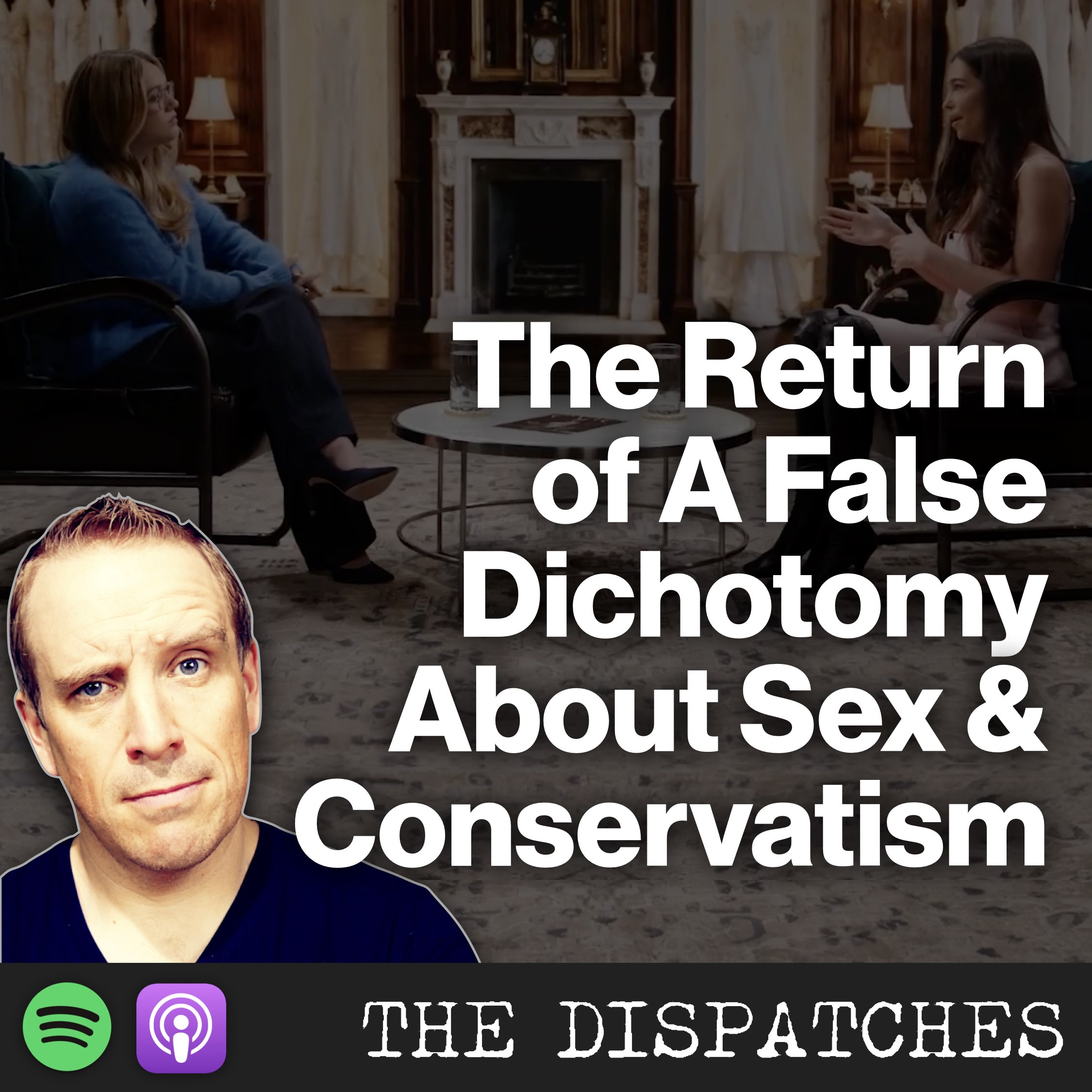
[00:00:04] Speaker A: Hi, everybody. Welcome along to another episode of the Dispatchers podcast. My name is Brendan Malone. It is great to be back with you again. And today we're going to be talking about sex. And in particular, something that came into my newsfeed just a couple of days ago was a clip from a new interview that has been conducted by Isabel Brown of the Daily Wire.
Isabel Brown, I've met her, A very lovely young lady. But the interview itself, there's some problems. She's interviewing a lady who is, I think she's one of the co founders, if I understand the history correctly, of a magazine called Evie. And Evie is described as being like an alt right magazine for women. And the whole idea behind it was the people who founded it, their stated aim was that they wanted to give women something authentic in an age where often they were grappling with depression and anxiety and. And a loss of basically a sense of what it is to be truly feminine because of all of these erroneous messages that have been thrown at them about womanhood. Now, that's not particularly controversial and you'd have to say that's a pretty noble aim in the current state of cultural affairs. However, there is something that really troubled me as I'm listening to this conversation unfold. Because what they've done, and this is where the controversy comes in in this particular regard is they have announced just recently that they are going to be. The next issue is going to be what they're calling the sex issue.
And effectively they're claiming this is really going to get into the question of sex and intimacy. And it's going to be the way it's been presented anyway and marketed is basically a sort of a no holds barred thing. And we'll look at the interview in just a second. We'll actually watch the clip because I want to address the clip because what's actually happening here is there is a return of what I think is starting to look like a bit of a cyclical myth. And this is something that's well in my wheelhouse for over 22 years. I'm in my 22nd year right now, actually. So not over 22 years. I'm in My 22nd year. Over 21 years. I have been speaking to audiences about the issue of sex and sexuality, particularly from the perspective of an authentic Christian anthropology. So this is an issue that I understand and I understand well and I am well versed in.
And it is fascinating to see, but also very troubling that there is this myth that is starting to return about the Christian church. And in this case, it's being framed as conservatism and the question of prudishness around sex and inability to engage, well, to think about, to discuss sex and sexual matters. And it's basically almost like this dirty little secret that's hidden behind closed doors. You know the old joke, Baptists don't like sex because they're afraid it might lead to dancing. So in other words, this is kind of prudishness. We don't like bodily stuff. We don't like fun. Sex is fun. It's bodily. Ooh, dirty. We don't talk about it. And that's effectively the false dichotomy that's being set up in this interview. So let's watch this brief clip now. And then I want to share with you some important points that are missing and why I think this is not a good take on where our culture is at, where it has been, and how we got into this mess regarding human sexuality. So let's watch this interview clip with Isabel Brown that was published just a few days ago.
[00:03:32] Speaker B: What was the impetus behind wanting to put out a sex advice and intimacy advice magazine for Christian married women? You know, there is this really great girl on substack, and she probably shouldn't even know that I read her. She's a liberal, and my friend sent me the piece, and she really understands what we're doing in a way that I feel like the right sometimes does not. Because in the beginning, we were the first to talk about the hormone hormonal birth control pill, which was at the time when I lived in la. My friends trained the Victoria's Secret girls, and they were all getting off the pills. So all the liberal girls were getting off the pill. So we start writing about it. We talked to Dr. Darling Bright and all these doctors, and it was a liberal thing, but because Evie wrote about it, it's conservative. And then because we launched the Sundress, the Washington Post did a cover. Is the Sundress political?
And it's like, I like. They just take Pilates. We love now Pilates is, like, an extremist thing to do. So I feel like they just take whatever Evie says and, like, turn it into a political thing. And I think it kind of makes the liberals also mad because they're like, what's going on? But when it comes to sex, for years you either had like, the, you know, hookup with whoever, it's super empowering. And then you had, like, the right side where they're like, oh, don't talk about sex unless it's trauma. Like, this was actually told to me by someone who is big on the right. They're like, you're not allowed to talk about sex unless it's sexual trauma. Someone actually told you. Yeah, one of the big. I'm not gonna say which magazine, but it was a big conservative magazine that's been around for, like, 30 years, but no one really knows about it.
But they're like, you can't talk about it. And it's like, okay, marriage. Back in the day, men wanted to get married probably because they wanted to have sex, and they're also in love, and you couldn't get that access unless you were married. So when the left took over and, you know, have sex with whoever, it's casual, all these things, then it's like, well, what's. How. How do you. Like, what's the point of getting married, aside from, like, loving someone? But the more you have sex with different people, the harder it is to, like, form a bond. So it's like, why did the right give up one of the most appealing parts of marriage to the left?
[00:05:33] Speaker A: So I think we can sort of understand and appreciate what she's trying to do here in this engagement, but there are some big problems here. I want to start, first of all, actually, with something she said specifically at the beginning of the interview, which is, again, it's a very noble pursuit to actually address the question of the hormonal birth control pill and its impact on women and their bodies, and not just women and their bodies, but also on sexuality and male female relationships. But what's not correct to say here is that this was actually the liberal position first. That is not a correct reading of history at all.
In fact, the Catholic Church was warning about this and speaking about this issue for decades and decades before anyone on the liberal side of the camp suddenly began to realize there might be something to this. And Catholic commentators in particular were very outspoken. I can think of several now, just off the top of my head, who have, like, books were written, courses, public conversations, presentations, all that kind of stuff, talking about the reality, the. The biochemical, the medical realities, the relational realities, the implications of the pill, and then, of course, this underlying natural law truth about human. Human sexuality and relationships and openness to life. And this is something that's been talked about for decades. And liberalism was not going in that direction at all. Now, you can find there are sort of what you would call initially, which were fringe. They are more accepted today, but they were sort of more fringe tenants of feminism, which were looking at the Pill. And they could see some of these issues and they were concerned and at times aghast by them. But in actual fact, it wasn't the liberal position at all.
That has come much, much later. And ironically, in the liberal sort of mindset, it's still not really the position either. What you tend to get are certain liberals who have perhaps more of a natural environmental type bent to them, who have seen the natural harms of the pill on the body and also on the natural environment.
Like, what happens is that the hormonal birth control pill. Sorry, I suppose it is a pill. Someone has to pay the price. But the hormonal birth control pill, what does it do? It's. It's a synthetic hormone. It flushes out of the female system quickly and it ends up in what. In a lot of places it ends up in the waterways and that's having a negative impact upon wildlife. And so, you know, there are people who sort of came at the issue from that side of things. But it's not really correct to say that this was like a, A liberal position that, you know, suddenly, you know, that, that this EV magazine or these, this group of conservatives sort of discovered it's not.
Yeah, it's not really correct. It's not a correct reading of history at all. And it still isn't really quite correct to describe it that way. In particular, like I said, I think we can appreciate what she's trying to do here. She's trying to engage with culture and I think present a positive face. But there are some issues here and what we're seeing, I think, is a. To me, like I said, it looks like a cyclical myth. It's just come around. Again, I can think of one commentator in particular, and this guy was a Catholic commentator. He's a good guy, a very good commentator, and I think very effective in the whole area of sexuality and relationships. But some number of years ago, he did an interview, a major mainstream media interview, and he was not careful in the way he spoke and it blew up badly. And again, it was similar to this. He was trying to engage. Well, and help culture to understand. No, you've misunderstood the church, the Christian church.
You think everyone's just a bunch of prudes who are afraid of sex. In actual fact, we are and have always taught that sex is sacred. That's how profoundly beautiful and wondrous it is. But what he did was in the interview, he made a mistake. He.
In his zeal, you could say, and not really fully considering the implications of what he was saying, he tried to present Hugh Hefner, the founder of the Playboy empire. And in fact, really, what I think it would be right to describe Hugh Hefner as the modern mogul of the creator, effectively of commercializing porn in the public arena, Open, commercialized and publicly accepted pornography. That's not an unfair description of Hugh Hefner. He tried to effectively present Hugh Hefner alongside the likes of Pope John Paul ii, who wrote a profoundly beautiful treatise on human sexuality commonly known as Theology of the Body. But his work, another work that he wrote, was called Love and Responsibility.
Profoundly beautiful and deep and very intimate kind of stuff.
And he put the two alongside each other, and he really shouldn't have done that. It was a mistake. And effectively, what he ended up doing was he made the mistake of creating this impression that Hugh Hefner was a type of sexual saint, but he got the outworking wrong. So Hugh Hefner was seeing the real problem here and he was trying to open it up, but he went the wrong way.
That. That's not a correct reading of Hugh Hefner at all. Hugh Hefner, that's definitely not who he was.
And so there's a mistake being made here. And just for clarity's sake, what I want to do now is I actually want to show you some of the imagery that Evie is using here. Just so we clear, this is not just a conservative or a Christian group that's put out a resource about sex for married couples.
They're doing it in a particular way. And I want to show you. This is. This is directly from their website. Now we're going to look at. This is, as I understand, I'm pretty sure this is, like, not a stock video. This is an actual model. So they've filmed this because it's the same model that appears on the COVID So far, all they've released is the COVID and this sort of teaser imagery to promote what's coming up. But just have a look at this. This is the type of imagery that they're going with. This is their website. This is a live feed, so you can see for yourself. And we're clear there's something going on here that's not right.
And this is key. What we're seeing here is something that, regardless of the intentions and the aims, this lacks modesty. And there's a. There's a distortion of human sexuality and the sacredness and the beauty and the wonder of that. We'll get to that point in just a second here. So this is the stance they're taking. And I get what they're trying to do, that they're trying to appeal to culture, almost certainly, and keep themselves relevant and say, hey, we're just like you. This is a mistake to make because what's presented here, it's missing some fundamentally important things. Effectively, what it's doing is it's mimicking a culture in a state of chaos and carnage. Now, one thing I'll also say before I go any further and make the key points that I want to make, is that she highlights one particular example where she claims someone told her that you should only talk about sex in relation to trauma.
I don't know how accurate a retelling of that is, that particular conversation is. I would be surprised if someone genuinely, particularly she seems to indicate the high profile, actually really, truly believe that it is possible.
But irregardless of whether it happened exactly like that or not, one seagull does not a summer make. And this is a mistake that we consistently see time and time again. Someone points to an anecdotal piece of evidence or a conversation they've had, and then they try and create a generalization out of it, as if somehow this is the entirety or even the fullness, the depth, the primary approach to sexuality and sex that is taken by Christianity. In actual fact, this is woefully not correct in this particular example. This is well outside the orthodox and mainstream Christian approach to sex and sexuality. Yep, sure, we can point to groups or individuals here or there that don't have a healthy take that perhaps, like I said, the old joke about Baptists, they don't like sex. Cause it might lead to dancing. You know, there's sort of this overly prudish approach to things, this failure to really grapple with issues. Well, that's true anywhere. But that doesn't mean that that's representative of the main or the whole. And I think this is really key to understand this is a reductionist approach and it's not helpful at all. So here's the points that I think are missing and are worthy of considering if we're gonna understand and engage well with this issue. First of all, conservatism never began what you could rightly call the sexual war, or probably most commonly known as the sexual revolution. In fact, what a lot of people don't realise is that the sexual revolution is a very specific phrase that has a very particular origin. And the origin of that phrase was that it was coined by a man called Wilhelm Reich. And Wilhelm Reich is. Is credited by scholars as often. He's called the midwife who helped birth the sexual revolution. And when we think of that phrase, the sexual revolution, what we tend to think is, oh, he wanted to promote revolutionary new ideas. You know, he wanted to open up the cupboards and let the light on and that kind of a thing. In actual fact, that's not what he meant at all. Wilhelm Reich was a, among other things, was a very committed Marxist. He's one of the second generation of.
I was going to say sorry, not Wilhelm Reich. He was the second generation of Sigmund Freud's psychoanalysts. He was going to be a doctor. That's where he went to. Like, that's where he's going with his career. He meets Sigmund Freud, is so taken by him, he completely changes his career trajectory and he becomes part of that psychoanalytic community. Wilhelm Reich, who coins the phrase the sexual revolution, was a committed Marxist, and he is the very first person, even though he doesn't get much credit for it, to who marries up Karl Marx and Sigmund Freud. The two together. This is something that you see in the Frankfurt school. They weren't the first to do it, though. It's wilhelmreich.
And what's important to understand here is that when he used the phrase the sexual revolution, he didn't mean, oh, just revolutionary ideas and opening up the windows and letting light on. And that's not what he meant.
What he meant was a Marxist revolution using sexual. And in particular, promiscuity, sexual liberation, tearing down all of the modesty, the chastity, the Christian chastity, marriage and family, all of that kind of stuff built on Christian chastity. We tear that down. And what that does is that clears the ground for us to rebuild society. And what he believed to be a better and new image. And that, of course, was in the image of Marx and communism, Marxism.
And so he recognized, you've got to clear the way. And he also recognized that marriage and family life, as in the sexual morality of Christianity, is world building. It's culture shaping. It gives boundaries that really matter and give form to culture in a very meaningful way. And it's. It gets in the way of Marxism because people are not blank slates until you clear all that stuff out of the way. So when he talks about sexual revolution, what he's meaning is, we're going to have a revolution. We're going to use sex as a weapon. He's an advocate for adolescent sexual liberation. In other words, adults sleeping with children and child sexualization.
This guy. We won't go into all the. Gory details, but he's not a great role model. And so this is not something that was begun by conservatism. Conservatism, Christianity never once said, let's target sex and sexuality and start wandering around telling people it's dirty and bad and disgusting and then all of a sudden the culture is reacting to that. No, it's the other way around. And it is a very deliberate ploy. And the whole idea of tearing down modesty, tearing down chastity, bringing in what one particular thinker called the, you know, libidinous morality, the morality of lust, and all these kind of ideas where you just cast off all restraint, these claims that, you know, Christianity promotes sexual repression with its sexual morality and sexual repression leads to Nazism and tyranny in the world. And so you must be free to express yourself however you want until we're at the point now where today the only remaining cultural, secular, cultural, sexual, more or norm is the norm of consent, that you must get consent. But if you've got consent, anything goes. As long as you've got consent, all the parties involved are consenting, anything goes. That's the only sexual norm which ironically only makes sense if the Christian vision of human sexuality in the human person is true.
Because the reason why you would require consent is because it is a truly sacred thing and human persons have dignity. And therefore you can act in ways that violate the sacred and violate the dignity of the person. But the key point here is that how we got here was not a war that was started by Christianity. It was a tearing down that was begun by secular and predominantly liberal culture that began that tearing down.
The second myth that is sort of embedded in these claims and these ideas is this idea that basically conservatism somehow moved away from sex in its like its response to the sexual revolution. Again, that is not correct. You could almost certainly cite individuals and group that went too far in their pushback against this. Sure. But again, this is not the main, this is not the whole conservatism never once started declaring, oh no, we shouldn't talk about sex, we shouldn't have sex, sex is bad. It didn't do that. What conservatism did was it just carried on and said we should reject what is obviously hedonism, lust, destruction, a lack of respect for human dignity and the dignity of the sexual act and the sacredness of it. The those things should be rejected. But what conservatism or Christianity did not do is it didn't suddenly start saying that sex is bad and sex is wrong and all these other kind of things.
In fact, in my time, my, my 21, over 21 years now working in this space, I've worked for different groups that actually promoted sexual resources.
Some of them actually, I can think of one in particular that just got some things wrong. It actually went too far in a couple of places. But these are resources for married couples about sexual int.
They were no holds barred. And I can think of one in particular where they actually got a couple of things wrong and they went a little bit too far. So this, like, these are resources that are decades old.
So the claim that somehow conservatism gave up on sex or stopped talking about sex and sexual intimacy, like somehow Evie magazine has suddenly rediscovered this sort of barren wasteland and they're there to bring life and fruitfulness to it. I'm sorry, that is just not correct. They are Jonny come lately's who are clearly not aware of the history and are looking at culture and history through this very myopic and narrow lens where they're missing the whole. They're not seeing. And probably because it's just a sort of terminally online echo chamber, maybe they're in where they're reinforcing ideas about sex and relationships and other things that they think are correct when in actual fact they're not. So like I said, this idea of, of conservatism and Christianity in particular not addressing this issue, that is just not correct. In fact, I've already talked about PO John Paul ii who wrote profoundly and and masterfully about these issues, his theology, the body, his love and responsibility, decades and decades ago.
He was producing works that were exploring this from a Christian anthropological and theological perspective. Grounding the sacredness of sex and the, the real practical intimacies of sexual love between husbands and wives and the grappling with stuff, all the issues that come up in that space in that deep Christian theology and anthropology. But he was not shying away from these, you know, sometimes perhaps blush worthy questions that you probably wouldn't generally talk lots about in public. But he was not shying away and engaging and describing and exploring and understanding these kinds of issues. And then others began to pick up that banner as well. Subsequently, in the Protestant world, Russell Moore was really taken by, he understood once he discovered theology of the body, just how profoundly important what Pope John Paul II had written was. Nancy Pearcey is another more recent example. Again, she was really enamored by this as well.
So this idea that Christianity and conservatism has not been addressing sex, has run away from sex, told people to stop having sex. Talbot was stopped being interested in it. This is just not correct. I'm not even sure where this idea is coming from. And it is not correct. Like I said, one seagull does not a summer mate. Just because you found a seagull squawking away about something, that doesn't mean that you found the whole flock. And it doesn't mean that you've discovered that summer is now here. That is, it's just not how that works. Here's another thing that is important to understand about all this and also, I should say, in the history of the Christian church too. The first heresy that the church grapples with is the heresy of Gnosticism.
And one of the big heresies that they had to grapple with in the very early days of the church was sometimes called Manichaeism. And it's promoted by a guy called Manas or Mani or Manichaeus. There's different manuscripts have.
He uses different titles, basically different names. And his idea was that anything to do with the body and bodily stuff was bad and wrong. This is a very Gnostic idea too, that things to do with the body and bodily stuff are bad and therefore sex. It's a bodily thing, it's a bad thing, it's. Oh, it's a disgusting thing. But the church rejects those ideas. It calls them heresies, it rejects them in the strongest terms possible.
So the idea that there's been this lineage of shying away or treating bodies and sex as disgusting or bad or embarrassing is just not correct. On the flip side, and this is the next point I want to make here, is that in our culture, a loss of modesty around sex and sexuality, a loss of appropriate prudence in that regard and safeguarding of intimacy and ensuring that it is kept as a beautiful, modest thing did not create greater freedom. That's not what's happened. Our liberal culture is not a shining beacon that we should be looking to in this area. It is an absolute wasteland of carnage and the human toll is disastrous. And that's not even addressing the fact that every single day around the globe there are now 200 million abortions taking place on average every 24 hours. 200 million. Yes, you did hear that, correct? That is not a made up number.
And even if we are to take out abortions that might be related to other issues or, you know, presented as something that is medically necessary, there are a huge number of those abortions that are social in nature, that are driven on the back of a failed sexual revolution and the breakdown in relationships between men and women. But there are other issues as well. The pornified culture we are living in, the idea that no one can talk about sex and intimacy is just not true at all. It is just everywhere. We live in a pornified, a porn saturated culture and the damage that that has done is off the charts.
I do a lot of work in the space. I regularly engage particularly with young men. It's predominantly young men who fall victim to this kind of behavioral addiction because of the way it affects and is targeted to the. One of the great strengths of the masculine genius.
We are very visual creatures, but that what pornography does is it exploits that and it works against us and turns it against us. And the damage that that has done to young men and then of course to relationships with young women as well and men and women and marriages in general. This is an area I've been working in for some number of years. And I've seen the damage up close and personal. It is ugly, it is disgraceful, it is just tragic carnage all over the place.
We now have a clinical condition known as youthful ed. Youthful erectile dysfunction. Young men who cannot engage in real flesh and blood sexual intimacy with a real woman because their brains are so addled by porn that they can sit at a computer and they can sexually gratify themselves alone by looking at a computer, but they can't do it with a real woman in the real world. Youthful erectile dysfunction, direct result of a hyper pornified culture. The boundaries came down, the freedom.
So it was sold to us. No, the sexual revolution was carnage and it's been an absolute disaster. Marriage breakdown and the way in which that's played out. Sexual disease.
Sexual disease is rampant and we just sort of live with it now as if somehow. Well, secular culture does as if somehow this is normal. The whole idea of if you're sexually active, the advice is every six months minimum, you should be going and getting a sexual disease test to see what you have won in the sexual lotto. The promiscuity lotto that you've been playing for the last six months. And we think this is normal and somehow we'll just manage it and somehow that's normal. This is not normal at all. Far from it. It is dysfunctional to the highest degree. The idea that you are supposed to be testing and somehow this is normal and good and healthy every six months just to make sure that you haven't contracted a sexual disease and done harm to yourself as a direct result of the very behaviors you're engaging in. Not Something environmental that's beyond your control, but your own behaviors that are chosen and don't need to be chosen. And we've normalised this. We think like, this is crazy.
Our general relationship dysfunction that we have going on, like in general. And also the, the general rates of unhappiness, anxiety, confusion that increasingly people are experiencing in our culture, the breakdown of community.
There's so many ways in which the sexual. What was promised as liberation has not turned out to be liberation at all. It has actually been nothing more than sexual enslavement. Human persons enslaved to their passions. And a big part of this is that we are plagued with sexual technocracy. This is very much part of the Baconian, Francis Bacon and the Baconian project now is technocracy. The idea that the technical experts will manage and control and, you know, they will guide us. Our lives will be managed, controlled and led by technocracy, technical experts, the technocrats. Well, in the area of human sexuality, we've had the same thing as if somehow as human persons we didn't know what we were doing. Sex was somehow we weren't getting it right. Our ancestors, who for thousands of years did a pretty bang up job in this regard. And then all of a sudden in the modern era we're expected to, to believe, no, no, in actual fact, no, the new experts are here to tell you what's what. And they're the real people that should be listened to. And the fruit of their expertise is carnage. Because what did they do? They reduced the sexual act from the dignity of the person, from a dignified sexual morality, from the sacred. And they reduced it just down to a biological action between persons and the primary aim of which they saw as pleasure. It's hedonism. It is a reductionist approach to human sexuality. It has been an absolute disaster. That's what the sexual expert sexual technocracy did.
And it's created carnage and great unhappiness and a whole lot of harm in its wake.
And so what we need to realize here, and this is the key bit I want to get to in response to what I've heard here from Evie magazine, is that increasing public talk about sexual intimacy.
You know, if we just sort of tear the curtains down and talk about sex, sex, sex and more sex, sex, sex talk, that's not what the culture is missing and it's definitely what is not. Like that's not what's needed right now.
You can hear plenty of sex, sex, sex talk everywhere you want. Flick on the Internet, flick on the TV, flick on your Netflix, jump on YouTube, wherever you want to go. There's we are living in a hyper sexualized pornified culture. The idea that somehow talk about just no holds barred discussions and imagery of sex and sexual intimacy and sexual behavior is somehow not present in our culture or is missing.
That's not correct at all. And so the idea that somehow we need more of that, but just if we're conservatives doing the, the, you know, the sexualized conversations and imagery, somehow that's actually the right approach. Somehow that's a good thing. In actual fact, that's not what's missing and that's not what's needed. What we actually need is a recovery of sexual self giving, not sexual gratification. We need to recover that sense of sex as truly sacred and a call to sexual self giving love. A recovery of authentic love and sacredness of human dignity and in both persons and in our actions. And a recognition that some actions are actually, they lack authentic dignity and therefore they harm both our dignity and the dignity of the persons and the culture and society we live in where we participate in those actions. It's harmful all round.
A recognition that self giving love is the fundamental essential thing that is missing here and that that rightly orders human sexuality and sexual activity in a profound and flourishing kind of way. If you try and just have the sex and the pleasure, you've got hedonism. If you don't have the proper ordering of those things, that's what's missing.
And that's the key.
So the idea that if we just have a bunch of conservatives now doing sexy fun time talks, that somehow that's the answer. It's not the answer. There's a big mistake that's being made here and it's a youthful one. And it's really, it is a disordering of the passions, I think, is what this arises from. This is my personal experience.
And the mistake that's being made here is that sexual satisfaction is being thought of and talked about as if it is the ultimate end of marriage. Like that's pretty much what she's suggesting in this video clip we just watched. Or that it is some like uber essential good for human flourishing. And if you don't have it, then somehow there's great dysfunction. That's the myth of the culture of hedonism.
That it's effectively. It's a slight repackaging, or it is a repackaging. Sorry, not a slight one. And it is a retelling of the myth of hedonism that our culture has embraced.
And the myth of Hedonism is that if you repress you, you cloak inappropriate, even a cloak appropriate prudence. So it's not repression, but you have modesty, you have chastity.
You don't just, you know, no holds barred, put it all out there for everyone to see that somehow that's repression. And repression is evil and repression is destructive and leads to great evil in the world, is the source of all evil. It's basically, this is framing sexual and the nature of the human person and human sexuality and intimacy in the framing of the failed sexual revolution culture. And that's a very bad way to approach things. Understand your own anthropology.
Don't imitate the failed anthropology of a dysfunctional, collapsing secular culture. That's the encouragement that I'd give to people. Don't make the mistake. And I think that is ultimately the mistake that's being made here. There's an imitation of a failed collapsing culture of chaos and sexual hedonism and dysfunction, rather than an proper understanding of our own anthropology, which is deeply grounded in the Christian sense of the human person as the imago DEI made in the image of God, sex between persons as truly sacred. A profound imaging of the Trinity where Father, Son and Holy Spirit give of each other in total self giving love, and that love is fruitful. Husbands and wives give of each other in the sexual act and total self giving love. And that love can be fruitful and you can hold your love in your arms nine months later in a hospital ward and give it a name that is profound, that's deeper than anything the culture offers. So let's just stop talking about and promoting, you know, bodice ripping, tawdry sort of, I don't know, cheap. What would you call them? The old Mills and Boons approach, which is what I see in that imagery on their website, as if somehow, you know, 50 Shades of Conservative gray. No, that's not the answer. That's not what our culture needs. What our culture needs is the deep magic, the good stuff, the real stuff, the stuff that actually says, hey, here's what you're missing and our anthropology is good, true and beautiful. And here's what it says. Because when you all of a sudden you discover a deep sense of sacred enchantment and mystical understanding about human sexuality when it's grounded in that Christian vision of reality, it becomes so much more than just man, woman, two bodies, pleasure, that's a reduction.
And we are failing our culture if we're just going to try and parrot back to them and sell back to them that reduction. And by the way, it won't work.
Because if you're someone who is looking for just that reductionist view of sex, you just want the pleasure, you just want it on your own terms, then you don't need the church for that. You can go and do that yourself. This is a. A failed endeavor. And this is one of the things that I've realized, that the older you get, the more you realize the folly of this kind of approach of deifying sex, even in the context of Christian marriage.
In actual fact, within the context of Christian marriage, sex is a truly beautiful and sacred and important thing. But it is not the most important thing, and it is a huge mistake. And the older you get, the more you realize that the deeper forms of self giving love that truly image God in very profound ways. Yes, the sexual act does image God. And when it's properly and rightly ordered, that's for sure. But you realize that there are even higher forms of love that point us to the life to come where Christ tells us there won't be any marriage.
And so those who are, for example, already living in single celibate vocations, the widows who are already living that faithfully in their relationship with God and the way they outlive their lives, those older couples who for all of the usual things as you age and everything else that impact their ability and they're no longer able to commune sexually, they are imaging something that is far more profound. And it is of the world to come, the life to come that we're all destined for. They are a sign, a witness to something profound in our midst. It's a beautiful thing and there's a higher calling in that.
And we lose sight of all of that when we reduce this whole thing down just to a post fall approach to human sexuality.
The whole idea before the fall is that Adam and Eve together experience an original communion and original unity. And that includes through the sexual act and the sexual act prior to the fall. And their sexual attraction to one another is not experienced as urge and an urge for gratification, an urge for my passions to be satisfied, they experience it and as a call to give of self and to receive the other as self, and to receive them as gift and to give of yourself and self, giving love to the other in a way that is total and full. The whole person is there. And this is the whole point. What happens in Genesis after the fall, after they've committed the sin, they've eaten the fruit. What is one of the first things that happens? The scriptures tell us this rather strange occurrence where they suddenly try and cover themselves up because they realize they're naked. And.
And a mistake that we make in that regard is to think that possibly what's happening here is that all of a sudden they've just realized something they didn't know before. Oh, oh, we're naked. Oh no. God might see my naughty bits. I better cover myself up. That's not what is going on there. Instead, prior to the fall, they were also naked, but they were naked without shame. Why?
Because there was. That experience was graced and there was a perfection there. And so they did not have urges and a desire to take the other and use them as an object for their own gratification. Instead they experience an attraction to the other to receive them in the fullness of their imago day and to give of themselves in self gift. And the sexual act is a completion and a fullness of that total self giving love. And what happens is the reason they become naked with shame after the fall is all of a sudden what is now into the picture. It's not that they're ashamed of being seen naked by God, it's the shame. Here is a reference to the fact that there's an awareness now that they can use each other as objects of lust. Because lust has now entered the frame. And the problem with lust is that I don't receive the other as gift. I take them and I reduce them to an object for my own gratification.
And so what I see here is more akin to that approach rather than a desire to help people understand that that if you want to experience the fullness of flourishing in your life, then you got to get back to this idea of sexual self giving love. The sacredness of the act, the fullness of the sexual act. And that is also in light of the fruitfulness, its possibility to bring forth new life and the way in which that is an essential component of all of this. You can't separate this off. Like it's just pleasure. And that's the sort of purpose of it. It's about so much more and you need to get people back into that space. And when you realize that all of a sudden in marriage, every sexual act, even the imperfect and fumbling ones, because this is something you learn as a married couple, it doesn't work the way that the. The romantic dream, even what they're trying to sell here, I think that the idea that it's sort of this perfect beautiful thing all the time, it just. The real world doesn't work that way. But even in those imperfect moments, you realize there's something deeper and more sacred and profound. There is still sacred enchantment to be found in the sexual intimacy between a husband and wife. And that's a beautiful thing. And that's what the, the world desperately needs right now. And that's what Christianity and conservatism can offer to the world, not just a sort of tawdry and cheap imitation of a culture of hedonistic chaos and carnage that is collapsing in an absolute mess of, of human flames and destruction around our ears. We need to be the light, not just summoning who is bearing a mirror up to the culture as I think it was. Martin Luther King Jr. Said, We need to actually be thermostats, not thermometers. A thermometer just reflects back the temperature of the culture. A thermostat changes the actual temperature of things. And that's what we need to be. We need to be salt and light, not a thermometer, just reflecting things back that already exist in a dysfunctional culture. Thanks for tuning in. Don't forget, live by goodness, truth and beauty, not by lies. And I'll see you next time on the Dispatchers. Hi there. If you're enjoying our content, then why not consider becoming a paid supporter of our work? You can do that at either Substack or Patreon, and the link for both are in the show notes for this episode. If you do become a supporter, then you'll get access to exclusive content, early release content, and also you'll be helping to fund all of the offline work that we do as well. Well, all of the youth camps and the events that we speak at and all that other stuff that happens that you don't see online.
A huge thank you to all of our paid subscribers. It's thanks to you that this episode is made possible.