Episode Transcript
[00:00:00] Foreign.
[00:00:04] Welcome along to another episode of the Dispatchers podcast. My name is Brendan Malone. It is great to be back with you again. And today we're asking the question, should Christians watch horror? And the reason I'm asking that question and why I want to take a bit of a deep dive into this is because last week Christian commentator Ellie Beth Stuckey published a video in which she suggested that Christians should have nothing whatsoever to do with horror. Now I don't know what's happened to that video clip because I went back in preparation for today's episode to have another look at it, but it appears now to be a dead link. And so it does seem that she's removed that video clip. Now I'm not sure why. Maybe she's had a bit of a change of heart. Maybe she has realized that her position wasn't quite nuanced enough or, or maybe she was just a little bit frustrated with the pushback and decided that she was going to deal with the problem by just getting rid of the clip. I don't know what the reasoning is, but as you can imagine, there was pushback from some very intelligent people too. I think well considered commentary from people who basically challenged that assertion and I think made some good points in response. So I'm not sure why it has been removed, but that video clip now appears to have been removed. Now, not long after that video was published, the Daily Wire published an op ed article by someone I know actually, and her name is Emma Fradd. She's originally from Australia, but she now resides in America. And Emma Frad is a very talented musician. She is someone who is a genuinely faithful Christian. She's not given to sort of wild eyed fits of hysteria or anything like that.
[00:01:46] And she published a piece on the Daily Wire in which she effectively agreed with Ellie Beth Stuckey and expanded a bit more and gave some lengthy reasons for why she doesn't think Christians should have anything to do with horror. And a big part of it for her and we'll get to this point, cause I think this is relevant, relates to her own personal story.
[00:02:07] And so she was someone who was very well previously, was very enamoured with horror and has had a bit of a change of heart about it all and has decided that it's not for her any longer. And so she was effectively giving those reasons and expanding upon that her own personal journey and then extrapolating out and explaining why she feels that this is true for all Christians.
[00:02:30] Now I disagree with Emma. As I said, Emma's a good person. I know her and I'm in awe of her musical ability and she is a woman of genuine faith. But. But I am going to disagree with her on this point because in actual fact, I think the right answer to that question, should Christians watch horror? Is that it depends entirely on context.
[00:02:57] There is context here that matters and there's two areas where this matters.
[00:03:03] One is the personal context of the subject who will be watching the horror.
[00:03:10] So like all things, forget about horror, it might be adult drama.
[00:03:15] It might be. And I don't mean any sort of pornographic drama, I just mean drama like for example, Saving Private Ryan or dramas about World War II and the Holocaust that has quite frightening and intense content or aspects to it that are not really suitable for young children. So straight away they. There's an example of subjective context. So the context of the actual individual subject who is engaging with horror or with a particular piece of content that would say, yeah, well, it wouldn't be suitable in that situation, whereas someone else, it would be okay. So the context of the individual subject matters. I have a friend, for example, who part of her personal story is that she spent many years caught up with the occult.
[00:04:01] And so her conversion to Christianity involved a lot of healing and ministry to free her from those spiritual bonds that had previously had a very vice like grip upon her. And so for her, horror is something different again. And for her as a personal subject, horror is not something that she wants to have anything to do with because it really does put her back in a place where, where she was in a state of bondage. It's not that the horror is doing that, but it is a reminder of that. It also, it's a reminder of a great evil that once gripped her life. And she's very keenly aware of that. And so she has a sensitivity. And for her it's just not something she's interested in. Again, that's a great example of where the context really, really matters. Or perhaps there is someone who just has a compulsion towards horror that is just not healthy in some way. Or perhaps horror, even, perhaps mild forms of it are particularly frightening for this person. Or they have an impact, a negative impact upon their spiritual life or their interior life where it robs them of their peace or it becomes a distraction for them. And maybe they find themselves late at night for days or weeks on end where they are captured by the fear over and over again. There's plenty of examples you can think of where someone, an individual could legitimately say, look, it's not for me. And so that context matters. The other aspect to this, of course, when you think about context, is what is the nature of the content itself? Because not all horror is equal. And there are definitely forms of horror, which I absolutely 100% would say that Christians should have nothing to do with, because there is nothing redeeming about those forms of horror. But once again, not all forms of horror are the same. And we'll get to that point. Because the first question that really came to mind for me when I watched the Ellie Beth Stuckey video was, well, what do you mean by horror?
[00:06:10] Because it's actually quite a broad genre now.
[00:06:15] And to just sort of lump everything that you might find frightening into that genre raises some interesting questions.
[00:06:24] So I've already alluded to this previously, but think about footage of the Nazi Holocaust. It's real. It is absolutely horrifying. It is horrific in the truest sense of the word, and it is an actual depiction of real evil that really happened in the world.
[00:06:43] Should people have nothing to do with that? Or in actual fact, is there a place, given appropriate circumstances and taking into account the appropriateness of the personal subject in their own lifestyle and situation and age and all that sort of stuff, is there actually a place where that horror should be seen by people and understood in its full and true context?
[00:07:10] What about books?
[00:07:11] There's a lot of conversation that went back and forth about movies, and obviously TV shows are part of that as well.
[00:07:18] But is that just because video horror has a certain visceral quality to it that is more compelling to us? You have this complete package where you have images, the images are moving, the images are accompanied by sound, they are accompanied often by a musical score. And all of that creates something that is perhaps a bit broader, deeper, maybe more frightening, maybe more psychologically capturing than what you find in perhaps just a typical novel or, you know, a Gothic horror story from yesteryear.
[00:08:00] What about something like horror in the Bible?
[00:08:04] Because I think it's not unreasonable to say that there are certainly aspects of the Christian scriptures.
[00:08:10] And this is why, for example, I was on Radio Rema with Andrew Urquhart this morning, and I talked about this very point.
[00:08:16] This is why the Book of Revelation, the Book of the Apocalypse, has been fodder for horror films for many decades now. Because there is stuff in the Book of Revelations which is actually, it is. There's horror, there's fear there. There's absolutely some really scary stuff in there. And possibly part of it is we take it for granted because we're so used to now being bombarded, our senses being bombarded by audio visual images that perhaps we don't really appreciate the depth of the written word anymore. And some of the horror that is contained within that. It. Even when you think about the descriptions of hell, the eternal torment of hell, the eternal isolation, the eternal punishment of hell, there is something really quite horrific about that. And obviously that then flows out into things like sacred Christian art.
[00:09:09] One of the debates that the early church had to grapple with was was it actually acceptable to depict Christ, his crucifixion on the cross, his passion, his suffering and his death, or was it this awful, scandalous horror that we should not look upon?
[00:09:25] And so there was a debate because some Christians were saying, no, you should have nothing to do with it whatsoever.
[00:09:32] So what about horror in Christian art? And you do see that in Christian art, or perhaps in the art form where it's a static image, we are capable of discerning something that maybe we lose sight of a little bit when we think about moving images like movies and tv. And the fact is that with a static image, perhaps we can be a bit more nuanced and we can recognize that. That art has a certain beauty to it, even in the horror that is depicted. And it serves a purpose. It's teaching us something about the world that is true, about the spiritual realities, about heaven, about hell, about the choices that lay before all of us and the final judgment where we will all have to give an account of. Of the lives that we have lived.
[00:10:20] And so in sacred art, we sort of recognize that, but maybe in moving pictures, we. We don't recognize that. Or is it perhaps a category thing where we would say, well, if it was sacred horror movies, then I'm okay with it.
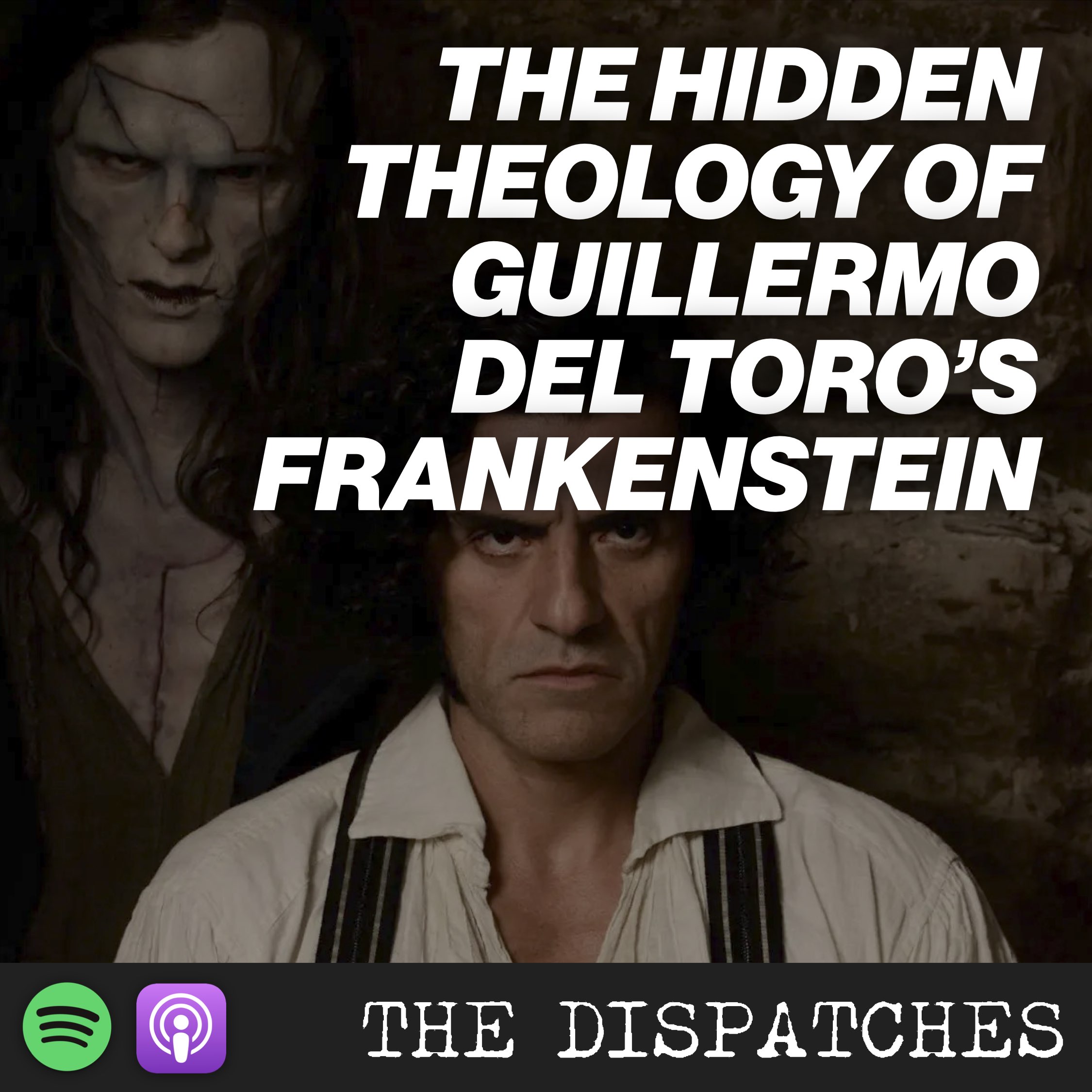
[00:10:32] But then I guess the question is why it seems that it's not really horror, then. That's the problem. It's the nature of the horror that is the actual issue here. What about some of the classics, like, as I said, the Gothic horror of yesteryear, something like Dracula or Frankenstein, two examples, which actually have some profoundly Christian insights and important warnings actually to share with us about the world in which we live and about our authentic anthropology as human persons and our place in the world?
[00:11:06] I think of something like Frankenstein in particular. The warning there about science and technology without moral restraint.
[00:11:14] What about something like true crime? And the reason I'm asking that is because Emma Fradd did include this in her article, because for her personally, this was something that she found quite compelling and spent a lot of time caught up in.
[00:11:27] Now, I'm not surprised by that. But it is a really interesting phenomena and I'm not clear why it is, but there is a massive true crime industry, if you like true crime podcasts, true crime videos, true crime Netflix series, which really was spawned on the back of the popularity of the true crime podcast genre. But the bit that's. That, by the way, that doesn't surprise me. The bit that is interesting to me, and which is, is a phenomena that I don't fully quite comprehend is the fact that for whatever reason, this particular genre, the true crime genre of today, is most popular with females. So, yeah, I'm not sure why that is, but that's the way that it is.
[00:12:16] Don't shoot the messenger. That's what the data tells us. Interestingly enough, the question then becomes, well, is true crime actually horror or not? And yes, there is horror in true crime, but if true crime has now been sort of transplanted into the horror genre, just wholesale pulled in there, what are the implications of that for something like regular crime reporting?
[00:12:39] When you read about criminal events that happen in day to day life within societies, and does that then qualify as a form of horror? Some principles I think might help us to maybe cut through the noise and think a bit more, I think prudently and I think a bit more deeply about this.
[00:12:59] Here are some principles that I think you should apply. And these would apply to any content, by the way, and excluding anything that is pornographic. Obviously there's no subjective debate here. There actually is such a thing as porn. It's not just in the eye of the beholder. And so there's no real dispute there. You can't say, well, couldn't you just apply this to perhaps something like pornography and justify watching that? No, that's not what we're doing here. And you'll see, even in a moment as we talk more about horror. There are certain forms of horror which I just don't think you can legitimately justify watching.
[00:13:35] And I'll explain why as we go. So first of all, what is it doing to you? Because it might not be good for you to watch horror. So that's, that's something to ask that might be true of anything. Though, as I said this morning when I was talking to Andrew Urquhart, the reality is that for some people that could be Anne of Green Gables.
[00:13:56] So Anne of Green Gables, for example, could be like pulling you into a world of totally disconnected fantasy that actually isn't in your best interest because you spend so much time consuming it. Or maybe you spend so much time consuming it, you just don't give the proper time that you should to your own family or to your prayer needs or to your job, because you're sitting there when you're supposed to be working and you're watching episodes of Hand and GRE Cables over and over again. So it's, it's, it's not so much here about the content. It's like, this could be true of a lot of different forms of content. So this is like just a general principle, I think. What is it doing to you and how much time are you actually spending watching it? Because even if someone anew was watching horror, that I think has merit to it.
[00:14:45] If they told me that they were constantly watching it and obsessing over it and, and hours and hours and hours of their week was spent dedicated to this, I would have to ask why, like, assuming it's not your job, you don't get paid to review these things or something.
[00:15:05] Why, what, what time have you taken from somewhere else to spend all that time doing that? But that's true of any content, by the way. As I said, it's not just horror.
[00:15:17] Why are you watching it? Is another good question to ask. Why are you watching it?
[00:15:22] Are you watching it because you genuinely are someone who is an ordinary human being who likes to engage with narrative? We are narrative creatures and narrative speaks to us.
[00:15:36] And there is a fascination we all have with narrative, and it comes in different forms. Drama, horror, thriller, fantasy.
[00:15:45] There's all sorts of different variations of narrative, from small stuff to big stuff, and we find it compelling.
[00:15:51] So are you just one of those people who's just genuinely doing the normal human thing and you engage with a piece of content like this and you are looking for the good, you are seeking that moment of goodness, truth or beauty out of the things that you spend your time being entertained by? Or are you someone who is caught up in some sort of unhealthy curiosity about all of this stuff, or perhaps has it become an addictive thing for you? You are watching it because you enjoy the thrill of the violence or the darkness itself. And if that's the case, then I'd say, yeah, there's something there that absolutely is not healthy and that's a completely different kettle of fish. And you've really got to question, I think, whether that really is an appropriate thing for you to be doing.
[00:16:38] Second thing is, this is, and this is part of the context I was talking about earlier.
[00:16:43] Not all horror is the same. It just isn't.
[00:16:48] There are now particular types of horror that are becoming more and More common.
[00:16:53] And I actually find it frustrating that they are labeled as horror, because I think horror.
[00:16:59] There are some noteworthy additions in the. The genre that we call horror. There are noteworthy examples that I think have something interesting to say about the world around us. And they. They speak to certain deep truths and realities in ways that perhaps other content doesn't. But now increasingly, anything that is horrific is just called horror, and I don't think that's particularly fair or helpful.
[00:17:29] So I would make a distinction when it comes to something like torture porn. So just like pure gratuitous horror, the, the. The sort of stuff I'm thinking here about films like Hostel, the Hostel series, these films that exist purely, and this is why they're called torture porn, for people to find themselves entertained by and titillated by the actual obscene graphic violence.
[00:18:01] There is no deeper narrative. There's nothing here. The narrative exists just as a rudimentary and very crude vehicle to allow the creation and promotion of these scenes of gratuitous graphic violence.
[00:18:22] That's all it is. As opposed to a narrative which. Where the. The visuals are not gratuitous. They serve the narrative and they serve a higher good.
[00:18:34] They point to something beyond the image itself. They point to something beyond the narrative. These small moments of mythologizing point to the deeper truth, the big story about the human experience and about the world in which we live.
[00:18:52] As opposed to torture porn, which does not do that. It absolutely doesn't do that. The other thing that we are starting to see now is the rise of nihilistic horror.
[00:19:03] And nihilistic horror, I mean, it's always been there, I don't know if it's fair to say, actually the rise of nihilistic horror, it has always been a thing, but it seems increasingly there's these bizarre attempts to effectively turn horror into this bland and spiritually void darkness. Like, in an Augustinian sense, evil is the privation of the good. It is the absence of good. It's not a thing in and of itself. And these films are perfect representations of that privation of the good.
[00:19:39] And you get silly things. Like there was a film a few years ago where effectively the story was that demon possession was nothing more than a medical psychological event. And you could cure it and treat it with, you know, medical and psychological techniques.
[00:19:58] That. That's not demon possession. That's just someone experiencing psychosis. That's. That's, you know. And so what you've got going on there is, is not just a false representation of reality, but a corruption of truth in the minds of those who watch it because it, I think it causes someone who perhaps is vulnerable in this way to, to look at that and think, oh yeah, you know, demonic possession, it's a nonsense. Demons don't exist, evil doesn't exist in that way. You know, there is no devil, there is no threat, etc, etc. It's all in people's minds.
[00:20:31] I think it was C.S. lewis, wasn't it, in the Screwtape letters where Uncle Screwtape basically talks about the fact in one of his letters that one of their greatest accomplishments and achievements is actually just making people think that they are not at work and that there is no evil in the world anymore. It's one of the devil's greatest tricks, right?
[00:20:51] And so you get that kind of thing. Another example actually was about two years ago, wasn't it the sequel to the Exorcist or another sequel to the Exorcist. And this time William Peter Blatty, who was the original author of the Exorcist, he had absolutely nothing to do with this one. Neither did William Friedkin, the filmmaker who made the first Exorcist film. And, and so this thing was just a hot mess.
[00:21:14] What was interesting was this film was effectively wish fulfillment.
[00:21:19] The actress who played the mother in the original Exorcist, Alan Burston, who played the character of Chris McNeil, she was quite outspoken about the fact, or she was not backward in coming forward about the fact that she despised the film on the level of that the devil and this demonic entity had to be dealt with by Christianity. It was only Christianity that had the power to actually rid this family of evil and to fight this evil. And she despised that fact. She made no secret of that. So she comes back now as a much older actress and she is in this film. It was a couple of years ago when it got released, the latest version of the Exorcist. And no, this is not Mike Flanagan's latest, latest version. This was a, this was a sequel attempt.
[00:22:11] And what you've got this time now is her wish is fulfilled. And this movie, aside from all the absurdities in it that we won't even get into here, but there is a conclusion to this film where they have a multi religion exorcism.
[00:22:28] So you've got pagan religions, you've got false religions, they're all there alongside Christians who are exorcising this demon. And in the end the whole thing is such a break from reality that it becomes meaningless. It's the privation of good because it's an abject Lie.
[00:22:50] And what happens is it loses its meaning as a result, it's just not meaningful anymore. You're watching this thing and you're like, oh, so everything is relative.
[00:23:02] There is no ultimate good. Then there is nothing that is really any more sacred or true than anything else. They're all just true. How are they all just true? And you know instinctively, you don't need to be told this, you just know instinctively that the universe in which we inhabit, it's under law.
[00:23:20] And one of those laws is the laws of, of non contradiction. You know, two things who are making, you know, that are making polar opposite claims about the world. In fact, more than two things in this case, they cannot all be true. That's just not possible.
[00:23:34] They could all be wrong, but they can't all be true.
[00:23:38] And so instinctively, like, you know within yourself, something's not right here and it just doesn't work.
[00:23:44] And so this privation of the good, this disconnection from reality, creates a narrative that just is not compelling at all.
[00:23:54] And so, yeah, there's. There is the rise of the sort of the nihilistic horror which effectively wants to create a world in which there is no God. The nihilistic horror, it might not be torture porn, but the nihilistic horror in which good does not triumph, or good cannot ever triumph, or a world in which there is no point to anything that you have just seen or been subjected to in this narrative because there is no ultimate good. And I think the reason we're seeing more of this now is because it is a reflection of the culture in which we live. And nihilism has become more dominant, and the crisis of meaning has caused some to embrace the lie that there is no meaning to be found. And so it's not surprising that that is then reflected in the art that is being produced in such a culture.
[00:24:49] So with some of those principles in mind, what about horror? Like why, why, Brendan, would you think that there could be good examples of horror?
[00:24:58] Well, I think one of the things about horror that is quite interesting is it's been relatively unscathed. And I say relatively because there are one or two examples, but it's been relatively unscathed by the ideological warfare of recent years. The last 10, 15 years ago, what some would refer to as woke, but the various ideologies that sort of fall under that umbrella, they don't really work with horror. There are one or two notable examples, but ironically, in those cases, what they've done is they've still created a compelling story there, there's compelling Narrative work that has gone on there. It's not just ideological propaganda. The other horror films where maybe they've tried to do that, the, the, the genre collapses effectively.
[00:25:54] Because one of the things that I think is defining about horror as a genre is it is a genre where there actually is good and there actually is evil. So it's a good versus evil genre genre. And you can't relativize that. You just can't.
[00:26:10] You can't have a world in which good and evil are relativistic and they are just pure social constructs and then expect to have successful horror that doesn't work. The only way that you can sort of exploit that idea would be the, you know, the. In forms of nihilistic horror where the horror is the thought of living in a world where there is no God, there is no order.
[00:26:38] And even ironically, some of that stuff can actually serve as a warning and point us back to the truth. But effectively outside of that, it just doesn't work. So with horror you've sort of got to conform yourself to these realities.
[00:26:51] You actually have to go in.
[00:26:54] Even if you don't buy in to the reality of supernatural evil, you, you have got to go in as an author and you gotta both feed in as if you do believe that that supernatural evil is real, that there is good, there is evil. And the most compelling horror at the end of the day is the stuff in which the good triumphs over the evil. Like I said, not all horror is like this. And there's plenty of tacky, cheap stuff out there. There's plenty of sleazy stuff, there's plenty of torture porn and all that other stuff.
[00:27:26] But there are examples in the horror genre which actually do, I think, grapple with the human condition. And they can be really quite creative in how they grapple with like horror related themes.
[00:27:41] It was interesting. There was several films came out within a short space of each other about, I think it's about 12, 15 years ago.
[00:27:51] And the theme of post abortion grief played a role in the movies in these horror films.
[00:27:59] There's a way in which almost with horror you can perhaps grapple with some of these deeper questions and even spiritual realities without having to admit, if you're not a Christian, of course, having to admit the embarrassing truth that you do find something compelling about this.
[00:28:19] Because for certain sectors of society it's considered passe. It's considered to be the stuff of the superstitious, uneducated, unwashed masses, the people who what not horror, I mean, religious belief. It's all just superstition.
[00:28:35] It's all just outdated. No, no, no. Christian ministers, they're all just exploiters or they're simpletons or even worse, they're abusers.
[00:28:45] But in horror, this is one genre where Christian ministers consistently appear in the form of the wise counsel of the healer, of the person who actually will go into bat for the victimized and will fight the evil and has the answer. And that's unusual because most other dramas or genres, sorry, that that's not the case anymore.
[00:29:11] And so there's something about that where you can, if you're a filmmaker, you can in this space, actually explore these themes without ridicule from your peers. If you try to do that in drama, then unless you're really well established and just have the, I guess, the street cred in the backing where you can get away with that, then you're going to have to come up with some angle, some ideological angle to sort of try and get away with it. You're going to have to make your religious figures flawed or, you know, you're going to have to insert something that's just, you know, it's. It's a new take on Jesus. What if he was really married to Mary Magdalene? That kind of garbage, right?
[00:30:00] But with horror, you can, like, the boundaries are real. And what's interesting too, to me about horror is consistently it points to the thing that Alan Burstyn, the actress, really despised about the Exodus, and that is the fact that in the west, it is the God of Christianity who is the Savior. It is the God of Christianity who will equip and who will armor you, and who his mighty angels will go into fight. And his ambassadors in the form of his ministers will be the ones who will come to your aid.
[00:30:37] And it's really interesting. It's a very, very interesting point to note.
[00:30:41] And. And I think it's why, you know, genuinely, that kind of horror holds us in sway in the west, because it's speaking to those deeper truths. One of the things I think that good horror does or can do, and if I can borrow from GK Chesterton, who once said fairy tales do not give the child his first idea of boogie. So bookie, as in the boogeyman Evil, right. What fairy tales give the child is his first clear idea of the possible defeat of Boogie. The baby has known the dragon intimately ever since he had an imagination.
[00:31:21] What the fairy tale provides for him is a St. George to kill the dragon.
[00:31:28] And that, I think is true of good horror.
[00:31:32] It's not. And if the horror is fixated on the boogie, on the evil, then it's missing where it can be at its best and most effective as a genre.
[00:31:44] It can teach you about this dragon, this evil, this darkness that you have known or sensed the presence of or seen the effect of in the world around you.
[00:31:56] It can teach you that this evil actually can be destroyed and that there is a higher good, a more powerful entity in the universe.
[00:32:11] And that more powerful entity is goodness itself.
[00:32:15] That powerful entity, of course, is God, the source of all good, the ultimate good who will triumph over evil.
[00:32:23] And so there's something really quite profound, I think, and important about good horror. When it's done well, that's what it does for us, I think. A good question, a general question to ask yourself. And it doesn't matter what the genre is, whether it's horror or whether it's something else. A good question to always ask yourself. And again, it doesn't matter whether this is written form or a movie or a TV show or music.
[00:32:50] Does it elevate me or motivate me in some way?
[00:32:56] And good horror, I mean the word good, not just in a sort of technical, craft way, like, did it scare you because it was so technically well crafted. But what I mean by, by good horror is does it actually point us towards the good?
[00:33:14] So with good horror, it can actually do that, right? It can elevate or motivate you. Even in those types of genre, you can find yourself motivated in some way or elevated and contemplating the state of the world and spiritual things in a much deeper way than you were before you encountered that. It might elevate you. It might lift you into those higher truths. It might encourage you. It might motivate you to go deeper into understanding, well, what does the Christian church actually believe and teach about these spiritual realities that I've just seen in this or read in this particular horror piece that I have finished, this narrative I've just come to the end of, it might actually even motivate you. And there are stories of people out there who have been motivated to make major life changes on the back of stuff like this.
[00:34:11] So if it's not elevating or motivating you, what is it doing?
[00:34:15] And things that are dark can still motivate you towards the good.
[00:34:21] But if it's not doing that, like, it's not causing you to lift your heart and mind up with so elevating you, or it's not motivating you towards the good, whatever that good might be, then what is it doing?
[00:34:37] And that question might be very clarifying for you about whether or not you should actually be watching horror.
[00:34:47] And for some people, the reality is that horror could just be too much of a stumbling block in their life, and therefore, it's just not an appropriate thing for them to be engaging with. And so for me, the question is not really, is it okay for Christians to watch horror?
[00:35:06] I think you've got to go deeper than that and ask the questions of, well, what exactly is it that I am watching that I am calling horror here?
[00:35:15] Why am I watching it?
[00:35:17] What is it doing to me, and how much time am I spending watching it, and should that time actually be given to something else?
[00:35:28] Because there are plenty of other genres. When you actually get down into the weeds in that way and start becoming more nuanced in the way you think about it and the questions you ask, you start to realize there's a whole lot of other genres as well that are miles away from horror that could actually also be posing just as much of a problem in someone's life. And one other thing I'd say, too, and I mentioned this on Andrew Urquhart show this morning, is there is an issue with curiosity.
[00:36:03] And things can arouse curiosity within us towards evil. And so that's, I think, a valid concern about horror and particular types of horror.
[00:36:14] Are they arousing within me a curiosity, and do I want more of that, or does it arouse within me a deeper desire and a gratefulness for the faith and the relationship that I have with Christ?
[00:36:29] The other thing that traditional Christianity talks about is the idea of avoiding the near occasion of sin.
[00:36:38] So in the Lord's Prayer, which Jesus taught us, we pray, lead us not into temptation.
[00:36:46] Now, that sounds a little bit strange at first because it implies that God could lead us into temptation. That's not what is meant by that.
[00:36:53] The way this prayer or that sentence is phrased, the idea that Christ is trying to convey there is that we would pray for the grace to be speared from temptation. So this is about spiritual vigilance. It's about having the grace and the courage and the prudence to take the right path that leads away from evil, not the path that leads towards it.
[00:37:18] And so there's this traditional idea about the near occasion of sin. So something that's not a sin, but could actually become a near occasion of sin because it's leading us closer towards it. So the question is, whatever you're watching, is it a near occasion of sin, even if it's not sinful in and of itself? And these are deep profound and challenging questions to ask. And I know that because I regularly have to stop myself and ask myself those questions. And sometimes, if I'm honest, I don't like the answers that my conscience is giving to me because they're a little bit too challenging.
[00:37:55] And it's just so much easier to actually sit there and mindlessly consume without contemplating too deeply. Thanks for tuning in. Don't forget, live by goodness, truth and beauty, not by lies. And I'll see you next time on the Dispatches.
[00:38:23] Sam.