Episode Transcript
[00:00:04] Hi, everybody. Welcome along to another episode of the Dispatchers podcast. My name is Brendan Malone. It is great to be back with you again and gosh, hasn't it been a long time between drinks?
[00:00:14] I am not going to apologise because that implies some sort of perhaps ineptitude or laziness or just general downright malefactored behaviour on my part. Is that a correct way of saying that? Malefacted behaviour, the behaviour of a malefactor?
[00:00:32] It's actually not. I've been so busy with my other work, speaking engagements, offline work and everything else that I just haven't been able to produce as many podcast episodes as I would have liked to. But gosh, it's great to be back with you and yeah, I've missed these conversations, I've missed our little chats.
[00:00:52] So it's, it's lovely to be back on air and yeah, let's see how long this run lasts because I've got a whole ton of other stuff coming up over the next couple of weeks as well. So, yeah, hopefully we can get back into a bit of a rhythm though. I want to talk today about an issue that really is quite serious and it really does matter a lot. It's an issue that is not being discussed as widely, as deeply and as seriously as it needs to be, considering the gravity of what it is.
[00:01:23] It is an issue that's starting to crop up more and more though in the public consciousness. But it's also an issue where people are clearly, clearly that they're just not sure what the heck to make of it. I think they are maybe either too scared to touch this, as we'll see an example of in just a moment, or possibly they are in a situation where they have become so consumed in a culture that has been living the exact opposite way that they just don't know what to do. There's no clear sense in their mind of how to solve this problem because they've been trapped in, in the liberal dynamic for so long, which encourages you to think of yourself as being an autonomous self choosing individual. You decide what's right for you, you build the future you want.
[00:02:10] And effectively we live in a society of people who are also autonomous, self choosing individuals and you don't tell other people what they should be doing, et cetera, et cetera. And so now we're sort of stuck and we are deprived of answers, of meaningful solutions, of meaningful ways, even of engaging with serious issues like this one when they come across our path because we've just been living in this, well, I guess like frogs boiling in a pot now for so long that we've sort of lost sight of things.
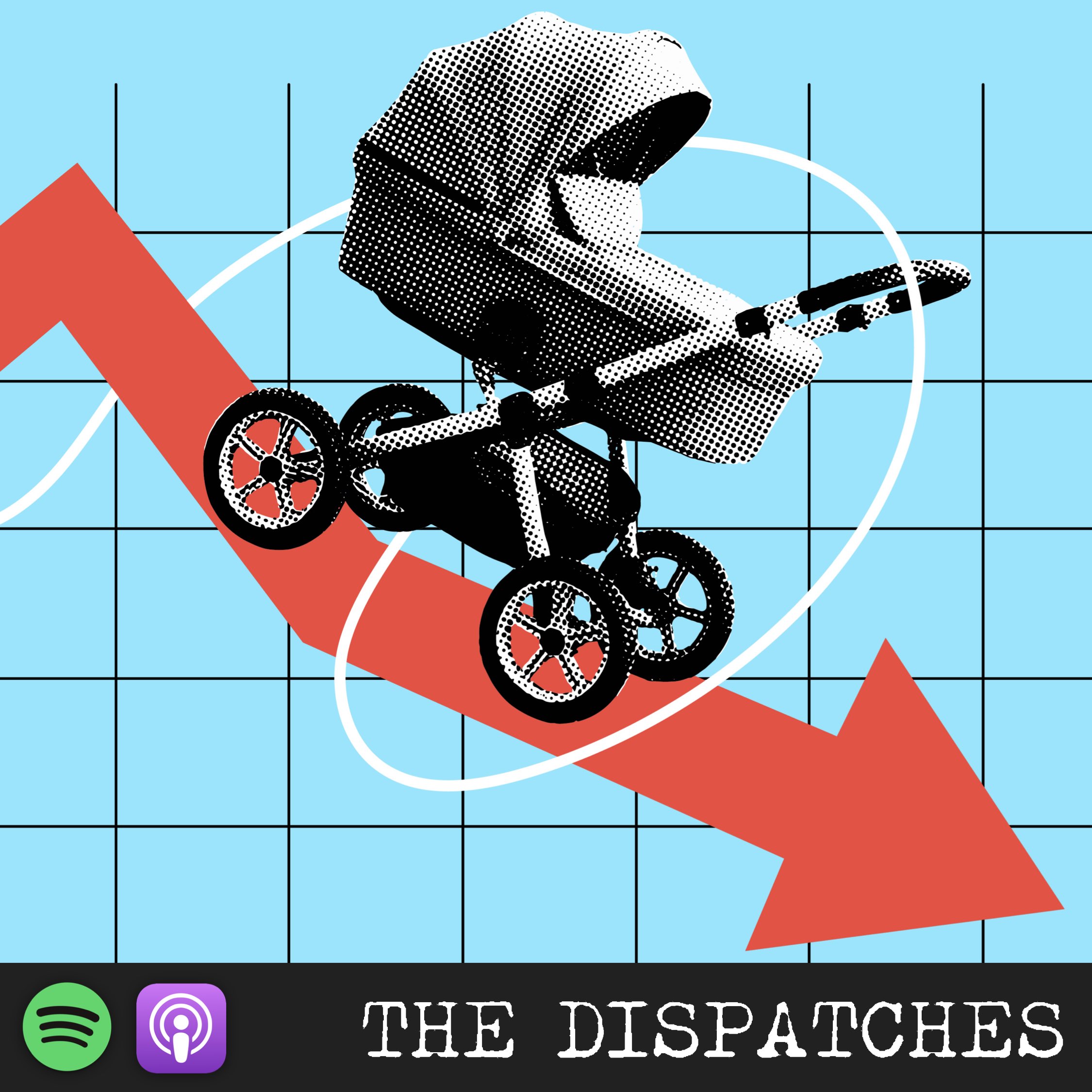
[00:02:40] The issue that I'm talking about is that of the collapsing fertility rate.
[00:02:47] We are not having enough children, number one. And number two, we are aborting so many of the children that we are conceiving that we now find ourselves in a situation where our fertility rate, and this is here in New Zealand, I'm talking about, but this is true around the globe, is in a state of collapse. In almost every country is either in the collapse now or is on the verge of the collapse. Some are bucking the trend. Sub Saharan Africa, we can see some trend bucking going on. And I often make the joke about maybe in future decades we will see a new Maga movement make Africa great again. When African people begin to realize, hey, we've had kids and we've got a strong youthful population, we've got a very mineral rich per square meter, resource rich country that we or countries that we're living in, why should we be exporting our best and brightest to foreign countries to help them prop up their own ineptitude, their own unwillingness to actually be people of legacy? People who thought beyond the nose on the end of their own faces, who thought about the future. As the old Greek proverb says, societies grow great when old men plant trees that they know they will never be able to enjoy the shade of.
[00:04:06] So in other words, when people are looking beyond to the unborn, to those who are yet to come and how they can live today to ensure that they leave a legacy for those who have yet to be born, who have yet to even be conceived, who have yet to even be thought of, but who will come over successive generations? Why should we as Africans be helping to prop up such nations who don't care enough about their own people and their own patrimony and their own culture really and heritage and communities to invest in that way. And I want to be fair as well, because I think a lot of people who are caught up in this in the west, they are in a sense they're caught up in a system which has badly, they've been malformed.
[00:04:53] The system has failed them. The, the elites have cut them off at the knees effectively. They've abandoned their Christian heritage.
[00:05:03] They have not formed them. Well, to think, you know, outside of the, the autonomous, self choosing, individual liberal paradigm and that societies are built on the back of a whole collection of autonomous self choosing individuals. The family has been relegated to the background. The family, well, that's lovely if you want to choose one for yourself. But we don't even know what a family is anymore, really. In the west, you could ask 10 different people potentially, and you might get a whole host of different answers about, well, what is a family? There's not even a clear definition of that. So you can imagine how hard it is on the back of that to even prioritize the fact that we should be having families. And we don't even know what that is. If you don't know what something is, you're not going to understand why it's important. Important. If you understand why the family is so important, then you know what its form, its shape actually is and what it should be. And then you're also going to encourage and, and really flourish in that area. So it's, it's a mess and people are caught up in that. And then we have economic systems that a lot of people living today have inherited, particularly younger people. They were born into these systems. It's not like they set them up, but now they bear the brunt of them. So I think it's important to, you know, have a bit of clarity here. I don't want to say, oh, there's a simple fix here and we can blame X, Y and Z. Let's scapegoat this group of people and if we just change X, Y and Z, then suddenly it'll all come right. No, it's a, it's a messy, complicated situation that we find ourselves in. But the cold, hard reality is we are not having enough children. We are aborting far too many of the children that we are conceiving.
[00:06:32] We are literally like lemmings rushing a hundred miles an hour off the cliff.
[00:06:39] And we're satiating ourselves with all sorts of hedonism and financial and pleasure centric distractions.
[00:06:46] But the whole time we are free falling to our own demise.
[00:06:52] And I know that's not a particularly positive way to start a podcast, is it? But I feel it's important to be honest about this because the gravity of this issue really matters.
[00:07:01] It really does matter.
[00:07:03] And we're not talking about it and we're not discussing it with the seriousness that it needs to be discussed with, because we are not serious people at the moment, unfortunately. There is a lot of fear, a lot of anxiety, a lot of panic, a lot of very serious and earnest conversations that happen about the question of climate related issues.
[00:07:28] But the grand irony here is that we are not having enough children. And the situation will be such that in a matter of Decades.
[00:07:38] There just won't be enough human beings on the planet to even emit the current, even anywhere near the current levels of climate, sorry, climate of carbon or of the manufacturing processes that emittle the carbon. It's going to be a very, very different world.
[00:07:54] Now this issue though did come up last week. There was a leaders debate. Yes, another one. I don't know about you, but I'm kind of actually getting a little bit over all of the leaders debates. I, I just sort of think to myself, oh lovely, there's another one of those is there? And it feels like every outlet and their dog has decided that they're entitled to have a leaders debate. And by the way, on a little side note about leaders debates, it always strikes me as quite hilarious. We are living under an MMP system. I wish we weren't. MMP is just so deficient. But we are. We have an MMP democracy.
[00:08:30] And under an MMP democracy, in theory, any party could actually become a major party if they get enough votes. And any party could form a coalition with any other party. Yet our leaders debates do not and have never reflected that truth. Our leaders debates are always set up like the two major parties, national and labor, will never ever go into coalition with each other. Not that I'm asking for that, but it's set up as if that could never ever happen, when in actual fact it could. So the two main leaders go head to head and then we treat all the other parties as if they are always going to be minor parties. And so we have a minor party debate, a minor leaders. A minor party leaders debate and they are segregated off. You know, the, the, the big kids are at the big table and the little kids all sit around the half size table and have their Fanta and their, their ice cream and sponge cake.
[00:09:18] It's all very odd when the reality is that they should all be in the room together debating their ideas. But that's a whole other story. But as I said, I don't know about you, but I am just, I sold. I told an audience actually over the weekend. I cannot wait for election day to be just done and dusted. I'm already fed up with it.
[00:09:34] I find the current situation with politics just to be far too vacuous in too many areas. The mainstream media doesn't help. Their conduct is just, it's just a mess. It's not helping at all.
[00:09:46] And then on top of that, this year in particular, it seems that the obsession with polling has just got out of control.
[00:09:53] It's like every 24 hours. Now it feels like we've got a new poll and they are just becoming increasingly irrelevant. But we are literally treating each of these polls as if they were the real election. And the result was decided. Ugh. National can govern alone, labor can govern with top. Top is on 8%, top is on 5%. And it's like, no, this is not real. This is just you ringing people and asking them to give you their opinion. It's a snapshot of a moment and nothing more. And the fact that we're so obsessed with them now, it says a lot about our culture, this data driven technocratic society.
[00:10:30] Tell us what the data says.
[00:10:32] And we're just so obsessed with it and we're so bombarded with it that it's actually, it just isn't helpful. It's having the exact opposite effect of what you would want in a democracy. It's not really freeing us and opening us up. It's just, it feels like it's trapping people. They're looking at the polls and they're using the snapshot, you know, minority surveys to determine, oh, who should I vote for and panic about what's going on and people losing their peace over it. Yeah. Any who rant over.
[00:11:00] I need a sound effect or a button, don't I? That actually tells us rant over.
[00:11:06] Yeah.
[00:11:07] In fact, I'm just looking at my soundboard right now. Maybe I should try, I think this one here. Let's see if this works. I reject the premise of that question. Yeah, good, it did work. So I've got a couple of those ones stored up. Yeah. In fact, I should have used this one earlier, shouldn't I? When talking about the current state of our culture. I love you, but you are not serious people.
[00:11:35] Yeah. So anyway, let's jump back into it. I'll stop playing with my soundboard right now and get back into it. So last week, leaders debate. Christopher Luxon. I was gonna say Christopher Luxaflex. I don't know where that came from, but oh man, it's a mess. And. And it's Chris. And Chris.
[00:11:52] A packet of Chris's. And so there was a debate between the two Chris's. And we had this question which was put to them at one point and it was about our declining fertility rate. So let's start. I'm gonna. It's only 40 seconds long, this clip, but I just wanna pause in a couple of places as we go. So let's hear what was put to them. New Zealand's fertility rate has fallen to a new low. 1.53 births per woman. We need 2.1 births per woman to keep the population stable. As you both know. First of all, that data is not correct. The current population rate in New Zealand is not 1.53. That's actually quite out of date or a couple of years out of date to be fair. But it is now 1.51. So it's even lower than what we heard here.
[00:12:38] And he's right though that we need 2.1 births per female in order to maintain our population.
[00:12:45] Let's hear what came next in this line of questioning. To all our loved up viewers watching at home tonight, I'd like to ask each of our leaders what's your message to encourage them to have more babies.
[00:12:58] Now as you can see straight away there's a real trivial aspect to what how this question's been presented and I can see this on screen, you can't. I'm looking at a video clip. Both Chris's are laughing. In fact, I've just paused this in a very weird place.
[00:13:12] Christopher Luxon has got his mouth partially open, his teeth out, he looks like he's sort of snorting through his nose and Chris Hipkins looks like a little mouse face. Everything's scrunched up as he's laughs. It's very funny. I'm not being uncharitable, just it's, you've got to see this to believe it. But anyway they the whole thing is being treated as a bit of a trivial matter, clear. And again, I'm not blaming Ryan Bridges, Ryan Bridger, Brian Bridges, the host of the debate for this this is a cultural problem. He's part of this culture. We don't really understand because we're not encouraged to think in terms of the long term and what it means to have legacy. We're just thinking about the here and now. We're not really thinking about the long term.
[00:13:56] We don't think in these terms and so we're not quite grasping the gravity of this problem. But, but I will say this, I don't think you would ever hear a question about climate change or about crime in New Zealand or about our economic situation or the cost of living ever presented in such a trivial kind of way as if it was sort of a light hearted secondary issue that doesn't really carry much weight.
[00:14:22] I think the only party really that I can see that's actually trying to address this in any seriousness with any sort of earnestness and it's still not ideal their solutions but they are better than anything else. You'll see. And that is New Zealand First. So I sort of wonder if perhaps the fact that it's New Zealand first who have raised this issue already months ago in the election campaign year, possibly that's why it's being treated in such a trivial way. It's if. Oh, yeah, yeah, Those, those right wing people are telling us to have babies. Oh, isn't that funny? We don't do that anymore.
[00:14:55] There's a reason why. You get this. As I said, part of it is we just, we don't, we're not grasping the gravity of what it means.
[00:15:02] We are frogs in a pot. We don't realize we're boiling here and we don't realize the implications of this.
[00:15:08] Secondly, I think our hearts have been hardened. I'm planning to do a piece on that soon, actually. The hardening of our hearts and I think particularly the culture of death with abortion, our hearts are hardened. Now there's also.
[00:15:20] I was on Radio Rema earlier this morning with Andrew Urquhart and we were talking about this issue and I. There is definitely also an issue, as I said to him, with. I think first of all, the liberal ideology which has conditioned us to think that you're not supposed to tell people that there is a good way, a right way and there's a bad way and a wrong way. And if you do the good and you do the right, you'll flourish. And if you do the bad and you do the wrong, you will diminish. No, no, no, no. You can't tell people they're supposed to choose for themselves what the good is and decide for themselves. How dare you tell them. And you certainly, you don't tell people what their family size should be. How dare you.
[00:15:54] Now, we're not talking about some busy body lady on the end of the street who's saying, oh, that family, they've got too many kids or they don't have enough. No, we're talking about a serious issue here we have to grapple with. We're not having kids. That's the point.
[00:16:05] It's not even really so much about a number. It's about the loss of celebration and enshrining of fruitfulness as a good thing that we should be pursuing.
[00:16:14] And if we've lost sight of it, why? Why have we lost sight of it?
[00:16:19] We'll get to perhaps some of the whys in just a moment. But yeah, it's the liberal ideology. So you don't tell people what's good and what's wrong and what's bad. They just decide that for themselves. And then there is also, as I said to Andrew this morning, there is also the issue of the fact that instinctively our culture knows that fertility and fruitfulness is inherently tied to religious belief, in particular in our. In the Western situation, to the Christian tradition, very much so. The idea of fruitfulness is celebrated as a gift from God and there is a command to go and be fruitful, to multiply.
[00:16:53] It's actually a good thing. It's a thing we should do. And there's a certain morality of chastity the Christian sexual ethic possesses that makes it so different from the hedonistic, contracepted, aborting culture around us. And so it's so instinctively our society still knows that they know.
[00:17:12] And so I think also there's this sort of unspoken thing, the elephant in the room. Don't mention birth rates because they might accuse you of being a far right religious zealot who has some far right Christian nationalist program for how many babies people should be having. It's the Handmaid's Tale coming true again.
[00:17:34] You know, the one everyone's always going on about, the Handmaid's Tale.
[00:17:38] Whenever we talk about this issue, it just. It's like the. The militant pro abortion protesters who dress up in the Handmaid's Tale outfits. And I've really only got one thing to say about that, but you are not serious people.
[00:17:58] Yeah, so I've rediscovered my sound board again. I'll try to keep off that a bit today.
[00:18:03] But you get, you know what I'm saying? And so I think, yeah, there's this, this treatment of this issue as if it's a secondary issue, when absolutely it is not. And, and just to give you a sense of this, here's Christopher Luxon who went first. Here's his response to that question. He's just been asked. Christopher Luxon. I'm not touching that. I'm not going nowhere near that, my friend. Nowhere near that. Chris have kissed. So you see what he did there. He's laughing and joking about it. Cause there's a bit of embarrassment. You can see it on his face. He's embarrassed. He also, I think, has initially read this question as if he's saying, well, how do we encourage people to have more sex? It's funny, isn't it? We're a very hedonistic culture. All sorts of hedonistic depravity is now normalised and participated in.
[00:18:47] Yet all of a sudden when we start talking about the reality of the birds and the bees and sex and babies, you know, they just go together. It's like, oh, it's very. Oh, it's. Oh, it's a bit funny, isn't it? Oh, he's, he's always talking about babies and oh, where do babies come from? It's like that kind of a. It's so funny. Those two things exist in this horrible, diabolical, contradictory tension in our culture.
[00:19:12] This weird purile.
[00:19:14] Puritano. Puritan. I was gonna say puritanical. Puritanical approach to, to bodies. But also a hedonistic disregard for bodies as well at the same time. And so he's, he's kind of a bit embarrassed. I think that's how he interpreted it. He didn't know what to say. There's a lot that's sort of loaded and he's like, he just says, I ain't going anywhere near this. And it's partly, possibly because he's a bit embarrassed about the nature of the question. It's partly possibly because he thinks this is a trap.
[00:19:40] They're gonna call me an authoritarian who's telling you how to have babies. And so what does he do? The Prime Minister of our country just steps right off the plate and says, oh, it's not my problem.
[00:19:52] It is my friend. If you're the leader of a country and you're a serious person, then you should have vision, you should understand legacy.
[00:20:01] And the problem is that our political leaders don't. They just don't understand this at all. So now let's throw to Christopher Hipkins and see if we can get a better result from Chris 2.0. Let's see what he.
[00:20:12] I know for a lot of younger New Zealanders, they're putting off having kids because they don't feel economically secure. If we can give them a greater sense of economic security, then I'm sure that you'll see the birth rates going up. But at the moment when people feel so uncertain, they put off those life altering decisions.
[00:20:28] Now here's the interesting thing. Before we get to his actual answer here and the substance of what he's claiming there. Cause this is a claim.
[00:20:36] It is interesting. Again, I'm watching the video that you can't see. You probably, if you watch the leader's date, but debate, you probably remember this moment. But Christopher Luxon, initially, you can start to see the look on his face. So he was laughing and joking about it. He says, I'm not going near that. And then when Chris Hopkins starts to give what is a, a very, I would call it a typically political answer and it actually has some sound, some semblance of something to it, offering a bit of a solution. You can see Christopher Luxon sort of staring off into the, the distance with that look on his face. He's like, oh, oh, I should have said something like that.
[00:21:09] Oh, it's quite funny to watch. But the point is this, Chris Hipkins is not actually correct here either. Yeah, it is true that if people are in economic dire straits then there's no doubt having children is a challenge for them. But here's the truth of the situation. We know that, see this is the age old claim. Well it's all got to do with economic drivers and if you improve the economic situation then people will start having more babies. That's the claim and that's what we've been fed for some time now. But in actual fact that's not what the data shows at all. That is not correct. And not only is it consistently the case that those in poorer regions are the ones having the children, we also know that there is a clear correlation with religious faith that is associated with the having of children. And lastly there are several nations who have desperately tried to reverse their collapsing fertility rates by financially incentivising people to have babies. So they're not just trying to fix the economy, they're to trying, they are trying to incentivise you to have a baby by rewarding you financially. So you have the babies and you're not just having them in a better economy, you are getting more economically by having the baby. And none of those nations, even though some of them have seen an uptick in their birth rate, none of those nations have been able to get back to replacement fertility levels even with some of them have got quite generous financial incentives. This issue is bigger and this is part of the problem. We are so collapsed now into the liberal mind, the autonomous self choosing individual. What can we actually talk about in public? Well we can talk about scientific matters because of course they're not religious questions and you know, we, the whole faith in progress and our science and our technology and it'll, you know, it'll give us all the answers and science is the greatest form of knowledge and all the rest of that kind of stuff that we're burdened by now. So we can talk about science, so you know, the climate stuff and all that and then we talk about other sciences and so we can talk about economics, cause that's part of the sciences and everyone needs money. And so what we start doing is we start thinking that somehow that this is just an economic issue. And that every answer, you know, if the only tool in your toolkit is a hammer, then every problem becomes a nail.
[00:23:22] So if the only tool in your toolkit is the economy or economics, then every problem has to become an economic problem. And that's consistently what we see. And this is a great example of that. Oh, it's just an economic question. No, it's not. It's clearly not. What's happening here is, I think, the most compelling answer, if you'd call it that, but I think the most compelling working theory, shall we call it that, is that what we've lost is a loss of the status of motherhood. And that is inextricably linked to religious faith. The loss of religious faith because motherhood is celebrated in the Christian tradition as a profound gift to the world. In fact, if you think about the. Regardless of what Christian denomination you belong to, motherhood is one of the central mysteries of our Christian faith because front and center at the birth of our Savior is his conception into the womb of his mother, his human mother, Mary.
[00:24:23] And so right from the very beginning, motherhood is there, it is celebrated, it's essential, it's part of the God's plan of salvation. And then fruitfulness is celebrated and having families is celebrated. And they are seen also as a way in which we image God. It's very profound how Christianity ties this all together and how it is a driver for fruitfulness and fertility if you have a religious vision. Now, to be fair, it's not just Christianity. Islamic cultures, generally speaking, are also having babies as well. They have a religious vision.
[00:24:58] And so what happens is you buy into a sense of self and decision making that doesn't actually put yourself at the center of everything.
[00:25:07] You have a higher, divine and eternal set of obligations in an eternal sense, a transcendent sense that actually dictates your decision making when you find yourself pregnant, when you buy into that vision of reality. As I told a journalist recently who was asking, or a journalistic student who was asking me questions about this, you buy in up front. It's not like. Cause the journalist asked me, well, what about? I just given a presentation at Canterbury University about the issue of abortion, the case against abortion. And it was a packed house and it was mostly pro choice students gave the presentation and then I had another 90 minutes. They hung around, they stayed for another 90 minutes in their seats. And we had a 90 minute Q& A back and forth dialogue with these pro choice students. And afterwards, this journalistic student who'd been there was writing a story about it. And she asked me, she said, well, what about your family? What if you had a difficult pregnancy or a challenging situation and you found yourself pregnant? And I said, well, the reality is that doesn't really change much for us because we bought in up front. And I said, this is the Christian reality. You buy in up front, you say, I'm getting married, I'm open to life. And so when life comes, I'm open to it. I don't make a decision each time a new life is conceived. Will I be open or not this time? That's not the Christian vision. So all of that has a bearing on the fact that, that you have children and you're open to children and you don't abort children and fruitfulness is celebrated, etc. Etc. Now, I want to also be clear that this problem of commodifying children, if you like seeing them as sort of schemes or things, objects in our plans rather than gifts that we receive from God, this, this problem has definitely crept into some quarters of Christianity as well. The whole, you know, 2.4 kids and we'll have one of each or we'll have three and, you know, that's a good number. All that sort of stuff that, that's still present, that's still a challenge. But Christianity has an answer and a deeper vision of reality. I think that really gives it a head start on everything else and it's why we previously weren't in this particular situation.
[00:27:09] So it's not simply an economic problem and you can't solve it that way. So this is a situation we find ourselves in now in response to all of this. And by the way, the seriousness of this issue really can't be understated.
[00:27:22] Like, I just took a few notes down in preparation for this episode and jotted down a few things that are worth considering. People talk about the pension, the retirement age having to raise because we can't afford to pay the pension at 65 anymore. That will happen. It's not an if question. So when political leaders just say, well, oh no, it won't happen on my watch, I think to myself, what are you talking about? That's going to have to happen. You're just kicking the can down the road because someone's gonna have to do it.
[00:27:49] This is not an if, if we raise the age, it is when the age is raised because we just don't have enough young children who are gonna grow into becoming tax paying citizens who are in the workforce who are propping up the current system that we need. So obviously the pension is one factor, but it's not just that. But that's the one everyone fixates on. In fact, there was an article, an op ed that was written this week suggesting that that's the answer. Just raise the pension age. That's not. That's one aspect of a much bigger crisis. Palliative care. Who's gonna fund palliative care? The rates of palliative care are climbing massively and we're not even to the halfway point yet. We're miles away from that, we're many years away from that. And as an aging population grows, you need more palliative care for those people in that population. Speaking of palliative care, what about healthcare in general? 80% of your healthcare is required for people over the age of 65.
[00:28:45] And so think about what that means when you've got a massive population over the age of 65 and growing and not a young population coming through, who's paying for all the healthcare, social welfare nets? There's all sorts of issues that this has implications for.
[00:29:01] It is, I think Petey James in her novel Children of Men, was very prophetic. If you're a long time listener, you've heard me talk about this before.
[00:29:08] And two of the things that she predicted, and one of them we'll talk about in just a moment, were the importation of effectively a servile working class of foreigners who will be imported. So in her novel, you've got a future Britain where everyone has gone infertile, so every woman is infertile. They don't know why, but there's no babies being born. And so you've got an aging population and this awful dystopian situation.
[00:29:31] And England has been importing people from other countries.
[00:29:35] They are treated as the servile workforce and then they are expelled from the country once they start to become useless to them because they don't want to add any more old elderly people to their burden that they have to support. So they just export them when they're no longer, you know, fitting the bill, serving the need that they've brought them in for. The other thing that she predicted was the fact that this would be a driver for euthanasia. And that is exactly what this will be. And people, I think, underestimate that particular crisis at their peril.
[00:30:10] The Children of Men depicts a world in which they have what's called the Quietus. And the Quietus is the ceremony, and it's a quasi religious liturgical ritual where elderly people are killed en masse. And the claim is, of course, that they are freely choosing it. But in actual fact, as we discover, it's not quite as it appears. But the point is that euthanasia has become an essential tool to cull the burden, if you like, to weed out those who are deemed to be a burden. In other words, these elderly people who are a problem because they don't have enough young people to prop up the system and to pay for them and support them and care for them. And that will absolutely be a reality for us in the west as well. You can already see that reality evolving. The conversations are already starting to be had about that very point. And not just that, but I think, was it about two weeks ago, there was news that came out of Canada about a church, of all places, a more progressive church, shall we say. They've progressed themselves right out the doors of Christianity, by all accounts, but a progressive church, where they now have a euthanasia liturgy where you can be in the sanctuary and they have a quote, unquote liturgy, Christian liturgy, which is not really Christian at all. And then the person is killed, they are euthanized right there in the sanctuary of the church. So the quietus is already upon us.
[00:31:29] And that's just some of the issues that people are just not even thinking about. And we're so obsessed right now with climate change, but like I said, there just won't be enough people to emit carbon or produce carbon emitting processes or to be part of those things, that the whole question of climate change, it will disappear. It will be a thing of a bygone era. It just will be, because there just won't be enough people. And we realise that we've got other bigger issues.
[00:31:58] Japan is a very stark example of this. Japan, because they have not favoured immigration at all, Japan finds itself in a situation where they have not had enough kids. They haven't masked it with immigration. And so they are looking towards a culture in a serious state of potential economic collapse by about the middle of this century, experts tell us, because that's the situation that they find themselves in. They haven't had enough kids.
[00:32:22] So it's a serious issue. It has huge, huge implications.
[00:32:26] And in response to this, we've got two of our major political parties, the Prime Minister and the guy who wants to be Prime Minister, the leader of the other opposition party, and they don't really grasp the gravity of it. We've got a media that thinks it's a bit of a side issue. And of course, if you're one of the liberal elite, potentially, you've been schooled in the Falsehood, the Great Lie of overpopulation. And you were sold a complete fabrication on the book of Paul Elric's 1968 book, the Population Bomb, which claimed that the world was heading to global starvation. This is in Europe and America. This was the claim he made. By the early 1980s, unless we had a one child policy implemented, you know, all this would happen. None of it came to pass. And you think at that point that would be game over. You're an academic and you make this wild eyed crazy prediction about what's going to happen and none of it happens. You'd think at that point it would be like, gosh, this guy's not a particularly reputable academic. His, his work needs a bit of fact checking, probably didn't get peer reviewed enough, he's not a reliable source of information.
[00:33:30] But no, no, that's the exact opposite happened. He's still highly regarded in environmental circles, funnily enough, despite the fact that the calamitous predictions he made didn't even remotely come to pass. And so a lot of people were schooled under that ideology. And I still meet people today. I was speaking to those university students a couple of weeks ago and those university students, some of them were telling me about overpopulation and I'm saying to them, no, we don't have an overpopulation problem. And one of them tried to scoff at me and I said, no, no, no, I said, where did you get that from? Where's your figures coming from? Because in actual fact, the demographic data is very clear.
[00:34:04] Almost all countries are now well below replacement fertility. Which raises an interesting point here because in response we saw actually an op ed piece that was published by the Post, and it was published by the post on the 11th of October.
[00:34:22] And in this piece Eric Crampton, who's an economist, is basically arguing that what we need to do is immigrate our way out of this problem. So what he's proposing is that we should be bringing in every single year approximately 125,000 new immigrants from Europe. And he is specifically singled out Germany and France.
[00:34:47] And he has said we should be importing immigrants who are aged 20 to 35 years of age.
[00:34:57] So what he's saying is every year we should import a group of young people between the ages of 20 and 35 years of age, 125,000 of them every single year from Europe. He singled out France and Germany. He's named the figures. It's very interesting. It's a very, very selfish argument when you look at what he actually says here. Let me quote to you from one section of this piece, just to explain what I mean. The Immigration New Zealand campaign ads almost write themselves. Come to New Zealand. Your government forces you and two friends to share the support of one retiree and it will only get worse in New Zealand. Three friends will help you share the costs of supporting one of our retirees and you're less likely to be overrun by the Russians.
[00:35:40] And so this is his very selfish. Look, come to us because you won't have to care for your own elderly people.
[00:35:45] Come, come and prop up our aging population.
[00:35:49] But think about what's being proposed here. First of all, he's quoted all these very impressive sounding numbers about the number of young people in this demographic who live in France and in Germany. But the question is, who are these young people?
[00:36:03] Are they actually Germans and French people themselves or are they actually immigrants or the children of immigrants? So in other words, all you're doing now is you are moving immigrants around the map. You brought them into France, you brought them into Germany, and now you're just going to export them out and bring them into New Zealand.
[00:36:25] So are they actually Europeans? Because this is something that sort of liberals are very red faced and embarrassed about. They don't know how to grapple with this group question.
[00:36:34] The question of like when it comes to immigration, the liberal assumption is that basically people are blank slates. And you can import someone from any country, any culture and put them into a completely different country, a completely different culture and they will just adapt and become that country like a citizen of that country, they will become part of that culture. But that's not a correct anthropology at all. That's not how human persons work.
[00:37:02] And it has been proven now to be the case.
[00:37:05] So what you end up doing is you import a whole lot of people who don't actually identify. And why would they like I would. And if you imported or exported me to Australia or you exported me to Germany, I might enjoy it there, I might enjoy my time. There's things about Australia I quite like and I could imagine actually living there. But I would always know in my heart of hearts that I was a Kiwi.
[00:37:27] I would love being there, but it wouldn't be my home and it wouldn't be in the deepest part of my being. This wouldn't be my Whakapapa.
[00:37:36] This, you know, wouldn't be my Tangata Whenua. I wouldn't be people of the land here. I would be in New Zealand. Always would be.
[00:37:43] So yeah, the idea that you can just bring people in and suddenly they will just adapt. That's a very liberal nonsense.
[00:37:50] And so what are you going to be doing? So think about this. Over 10 years, you are talking about growing our population by 1.2 million foreign young people.
[00:38:02] 1.2 million.
[00:38:03] So what that means is that approximately 20% of our population over a 10 year period would no longer actually be New Zealanders, they would be foreigners.
[00:38:16] They're gonna vote, they're gonna bring with them their vision of reality.
[00:38:20] They're gonna bring with them their own sense of what a culture is and what it should be. Their own vision and sense of what social hierarchy is or is not. And you're not gonna be able to weed that out because A, liberalism doesn't like asking those questions and B, you're too desperate because you haven't had enough babies, so you've gotta go, well, any port in a storm will do. And you sort of cross your fingers and hope for the best. And then your kids and your grandkids will inherit a problem.
[00:38:44] That's the reality of what you'd be doing there, or a potential problem. Should we say think about something like this is what I said to Andrew this morning on Rima. Think about what happens to something like Mori culture. Moridim has really grown an extra set of legs over the last couple of decades. And I think it's actually quite a positive thing. I think there's a much better relationship, generally speaking. There are extremes where things can get into excess, we all know that. But generally speaking, it's a much better relationship now. There's a lot more of a, I think a comfortability with Kiwis in general, with Mori culture and Mori dim and understanding Mori culture and what it is. And I think the relationship is a lot better than it's ever been.
[00:39:22] And that's a good thing. That's a really good thing.
[00:39:25] And the reason why this has happened is because that relationship has been formed and it has flourished and grown over successive generations.
[00:39:34] My family, who are Irish in heritage, have been here for six generations, about five or six generations. And there's a relationship with the people in the land that goes back that long. So I am a person of this land and I recognize my fellow Kiwis who are Mori. They're part of my story as well. Right.
[00:39:53] It's just a given. That's the reality of it.
[00:39:56] But what happens to people who are imported here into this country and they have no family connection to. There's no generation. Deep, you know, multiple generations, deep history of Connection to this land or to the people here or to the Mori people here? What happens to Mori culture and its ability to actually thrive and remain strong?
[00:40:18] Because the reality is that these people will decide how they think New Zealand should look. They'll be voting here, right? They'll be making key decisions. And if they don't have any connection to the land, to its history, then why are they suddenly just going to evolve? That's not how connection works.
[00:40:37] That is not how it works.
[00:40:39] We can't just give you a course in Mori studies and say, bang, you've got the connection now. It's much deeper, it's much more profound than that. And so there's big questions there. You've got people you're bringing into your country who are a whole nother step removed.
[00:40:56] They're not just not Mori people, they are people who are not even people who have a long standing connection to New Zealand, the home of the Mori people. So it's a whole nother step removed. Why would they care for our elderly people over time? Like, seriously, if you're a young person who's come here from Germany or from France, you've got your own people, your own culture, your own country, why are you going to look at our elderly people that we haven't cared for by having enough babies and say, well, I think I'll altruistically care for them. Especially after I've responded to an immigration New Zealand ad that has told me, hey, be selfish, get the heck out of your country. Cause they're putting too much of a burden on you. These elderly people come to this country and look after our elderly people instead. If you've left because you don't want that burden, why are you gonna suddenly tolerate looking after elderly people in our country? Here's another question to consider. Why would early adopters stay in such a scheme? You see, the truth is that if you're an early adopter of this grandiose scheme, then it's not going to be great for you. You're a pioneer, you're setting out into the wilderness and there's no towns, there's no cities, there's no infrastructure. You've got to build it all effectively. So you are the ones who have to do the hard yards. So the early adopters of the scheme, it's going to be a lot harder for them. The later adopters who come in late, assuming the scheme lasts, they will be able to reap more of the benefits of coming here, these young people from Europe. But the early adopters won't actually be in that same position. So why would they stay?
[00:42:32] Why would they stay in New Zealand? Because this is gonna be one of the things. This is what PD James made that prediction about the servile working class that's brought in to England and then disposed of. Once they become a burden, they can't serve their useful purpose anymore.
[00:42:47] The reality is that England is able to do that because they have the wealth, the resources to be able to fund such a scheme.
[00:42:55] But New Zealand is not like that. We're not a big country. And these German and French young people won't just be being competed for by New Zealand.
[00:43:06] There will be many other much bigger, much richer nations who will be making all sorts of offers to these people that are likely to be far more appealing to them to stay.
[00:43:18] As one economist who responded to Eric Crampton's piece, so there was another piece by Michael Riddell, and he responded to this. And as he said, I think this is a really good point, as he said this. And all this assumes that's Crampton's scheme, that the Crampton scheme doesn't lead to substantially increased outflows. Whether New Zealanders or the new migrants, many of those young French and Germans will look on us as a backdoor entry to Australia, a richer country with better beaches. And by the way, he's absolutely right about this. I've been in Australia this year four times already. I do ministry work at least four or five times. I'm already booked for four different ministry trips into Australia next year already. And so I spend a lot of time in that. Well, a lot. I spend a relatively reasonable amount of time each year in that country. And a part of my travels involves me getting an Ubers and getting Uber rides and talking to Uber drivers. I actually talk to my drivers and talking to people who work there in hotels. And you see a lot of. You meet a lot of the immigrant workers there. And the consistent story that I've heard over the last couple of years is that they came to New Zealand. I heard the story more than once that they came to New Zealand and New Zealand was the pathway to getting access into Australia. They did their few years in New Zealand, and then they could jump across the ditch for better prospects. So they're smart enough and savvy enough to know, well, we've opened this door for them. So why would that suddenly stop being an issue in future? Even if the houses are more expensive in Australia? He says, come here for a few years, get citizenship and move on.
[00:44:50] A worst outcome I think that should be a worse outcome. It's spelt wrst. But I guess a worst, even worse case scenario outcome would be if Australia were then to restrict New Zealanders freedom to move. But because they said hold on, what you're doing is you are just a gateway for immigration that we are not seeking.
[00:45:11] And we've got lots of people just coming into our country and that's creating issues for us. And so all of a sudden New Zealand now has two problems, people who don't want to come here, cause we're not the gateway anymore and then we can't even actually get to Australia.
[00:45:25] So this could be an absolute disaster for us. So like I said, why would they stay?
[00:45:30] Biggest question of all, are these really German and French young people? There's big issues going on in France right now and it's clear that there is a question here of which nationalities and ethnicities and are really sort of driving this and what's going on? The importation of foreign cultural issues.
[00:45:50] There are Palestinian flags draped all over the place.
[00:45:54] Now, regardless of what we might feel about the Israel Palestine situation, that is a foreign issue.
[00:46:01] And so all of a sudden this foreign issue has now become the dominant issue in these other countries as well. And that has big implications, really big implications as people are starting to find out now. The other thing of course, by the way, is that elderly populations will focus on elderly consumerism and elderly interests. That's what all the demographers are indicating to us, that what you'll find is that the older population that will be where the wealth will reside, they'll have the disposable income. Now typically it's been younger people who have the disposable income, but it will sort of flip the other way. And so what happens is you'll get more and more businesses and more and more of a culture that is actually framed on meeting the needs and the consumeristic desires of an aging population.
[00:46:47] So you're coming here as a young person, what does that mean for you?
[00:46:51] Will you find a population that is youth friendly, quote unquote, or will you find a population that is a great mecca for elderly people but not really for you? And so therefore, oh yeah, I'm out. At least I can go to a bigger country and there's a bit more diversity. So this is a serious issue. It's a situation that's not going to go away.
[00:47:11] We continue to fail in this area. We're making it worse. We're not treating it with the seriousness it deserves and, and the reality is the cold, hard conversation that we need to have about this is how we view motherhood, how we view motherhood. Everything flows out from that, how we view motherhood. And also the fact that we just cannot. It is inescapable. We cannot help but be confronted by the question about the number of our own people we have aborted.
[00:47:40] There are serious consequences for the decisions we make.
[00:47:45] The liberal ideology creates in us the liberal mind which shrinks us down. It shrinks our vision and causes us to think that it's all just about the here and now. It's just about my four walls and what goes on inside them. It's about me and my interests, or the interests of me and my family, or maybe those people closest to me. What it fails to appreciate are the anthropological, cultural and social implications.
[00:48:12] The way in which our behaviors don't just affect us.
[00:48:17] They shape not just the culture, the broader culture. They don't just have implications for the broader and wider community which liberalism struggles to grapple with, that let alone the fact that our actions and consequences have chronological implications.
[00:48:35] In other words, you are building a legacy or you are diminishing and eroding a legacy by the decisions that you make today. And I want to be very clear about this, that there's not an easy answer here. This is one of those situations where I look at this and I think probably it's only going to be calamity that will actually force us into a situation where we actually throw off the restraints of the current social order and ideology because it's currently too comfortable. CS Lewis talks about this in his book on the Problem of Pain. And he quotes St. Augustine and he says, you know where he. That famous quote in that passage where he talks about suffering as God's megaphone and he shouts to a deaf world. And then he goes on to quote St. Augustine, who says, our hands are full. Like God wants to give us something, but our hands are already full of stuff of our own making. We've got our own idols, our own satisfactions, our own satiation, all that, all this other stuff, the hedonism, everything. Our hands are full.
[00:49:33] And so the only way St. Augustine says that God can actually make us wake up and listen to him is if he makes our lives less agreeable to us. He has to unburden us of all these false idols. And the only way to do that really is particularly the cultural level, you'd have to say, is calamity, where all of a sudden you find your life is no longer agreeable to you and you are now willing to turn away from the idols of false happiness and actually start looking at what is good and true.
[00:50:04] It's a serious issue, though, and the conversation needs to be treated more seriously. And that conversation is urgent. Thanks for tuning in. Don't forget, live by goodness, truth and beauty, not by lies. And I'll see you next time on the Dispatches.
[00:50:24] Sam.