Episode Transcript
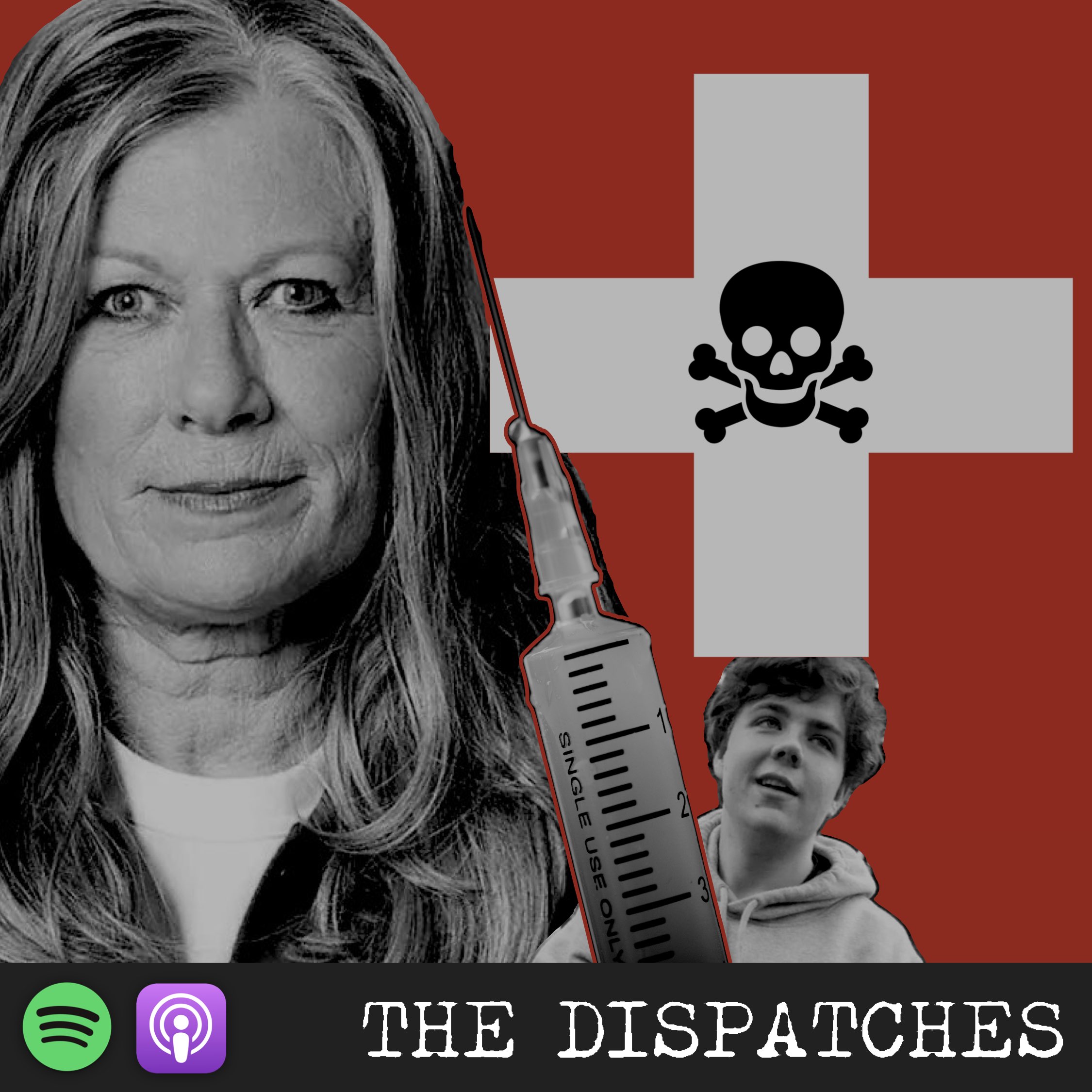
[00:00:04] Hi, everybody. Welcome along to another episode of the Dispatchers podcast. My name is Brendan Malone. It is great to be back with you again. And today we're going to be talking about a truly awful case of suicide that is about to unfold in a European euthanasia facility. What I want to do today is I want to talk first of all about the specifics of the case, and then I want to go deeper and I want to explore the reality of the cultural context in which this is taking place and. And the implications of that, because I think it gives us some much needed clarity. First of all, some of the specifics about this case. So you may have seen this headline floating around in the last day or so. The lady who is involved in this incident, her name is Wendy duffy. She is 56 years of age, and four years ago, tragically, she lost her only son, who died suddenly at the age of 23. Now, you can imagine that that would place an awful burden of grief, and in this case, that's exactly what happened. Deep sadness and grief upon anybody. And obviously this has spiraled into what is clearly depressive territory, because previously she has actually tried to take her own life, but failed four years later. She is now scheduled at the time of recording this within the next 24 hours to commit suicide at the Pegasus Euthanasia Killing center in Switzerland.
[00:01:25] Now, a little bit about this facility, because this facility, Pegasus, has a very chequered history. It was founded at the end of 2019 by some Swiss suicide activists. It has an association with Philip Nitschke. You may have heard that name before. He is the Pro Euthanasia Campaign, a hugely controversial pro Euthanasia campaigner based in Australia. He is the man who is credited with the invention of the Sarco Suicide pod, that podcast purple pod that looks like a tanning bed, which is like a dystopian device designed for people to commit suicide, and they climb into the pod and they press the switches, obviously, and end their own life.
[00:02:05] The first use of that, or certainly the first public use of that happened in Europe.
[00:02:10] What was it, about a year and a half ago from memory, or maybe just a little bit longer. But you might remember that case. It attracted huge media attention, and obviously also the local authorities got involved in that particular incident. Now, Pegasos had an association with. With Philip Nitschke, because Philip Nitschke in Melbourne previously was running a Pegasus office. So the killing center was based in Switzerland, but they had an office, basically, you might call it a perverse kind of outreach office in Melbourne and they were helping to facilitate people from this part of the world to go to Switzerland to end their lives at the Pegasos Killing center over there. That office, as I understand it, has now closed.
[00:02:53] This place, the Pegasos Killing Centre, obviously, as I said, has a checkered history already. Remember, it's only been open since 2019. But last year a lady called Anne, this attracted huge media attention at the time. But a lady called Anne From Wales, aged 51, traveled to the euthanasia facility and committed suicide. She was healthy. The reason for her suicide was depression over the loss of one of her sons.
[00:03:20] Now this provoked great controversy at the time because her family was not notified. She lied and claimed that she was going on a holiday. Now this was very similar and why this, I think drew a bit more attention last year was because in 2023, the year before, there was a similar secret killing of a 47 year old man called Alastair Hamilton. And as a result of that and the controversy that sprung up around that, they promised to amend their official policy and Pegasus said that they would never carry out another suicide without first notifying the family. And clearly that did not happen in the case of Anne last year. In 2024, another lady called Catherine Kassenhoff, and this was another case that attracted media attention, traveled there from New York all the way from America after a failed custody battle and she took her own life again, healthy, no issues. This facility is clearly operating as a suicide killing centre for anybody who is willing to go there and pay the cash.
[00:04:23] Let's look now though at the deeper realities of this case because it's not just about this truly shocking incident involving Wendy Duffy that is now making headlines.
[00:04:36] There is a deeper cultural reality at play here and I think it's important for us to understand this. And in contemplating this particular case, there are four aspects that I think really stick out to me that I think are worthy of our consideration. First of all is the fact that Wendy Duffy is absolutely being exploited here.
[00:04:53] She has paid £10,000 to be suicided at this facility in New Zealand dollars. Right now that's about 23,000 New Zealand dollars.
[00:05:05] Even if she wasn't being exploited in this way, it's already clear that her case is now being exploited by others. Even, for example, the pressure that some are trying to exert on local lawmakers in the United Kingdom. They've utilized her case and they're saying, look, she should be allowed to do this kind of thing right here in the United Kingdom. They're claiming somehow that is it is lacking in compassion. And that' awful thing that she has to travel to go and do this. And this should be provided to her. The option of doing this should be provided to her in her own home country. She has also obviously been gravely failed by lawmakers. The fact that Swiss authorities even allow this to happen is just astounding. It is absolutely shocking that even those who are pro euthanasia and assisted suicide have not actually stopped and said, we need to close this loophole. We need to stop people coming here taking their lives. We need to stop people coming here taking their lives who are simply doing it because they experience depression and anxiety, sadness, grief and other things.
[00:06:13] The fact that they have not taken that step really does speak to the truth, the deeper truth of the ideological heart of the pro euthanasia and pro assisted suicide movement.
[00:06:25] Despite the claims that they make being all about dignity and compassion, really, when you burrow into it and you look at their history and you hear from the key leaders in this particular ideological pressure group, it is abundantly clear that their focus is actually on a perverse and extreme form of autonomy. And it's really about liberals being able to do whatever they want to, including taking their own lives for any reason whatsoever.
[00:06:54] When you look at the Swiss law, it actually allows for assisted suicide as long as the motive of the people who are helping someone to end their life is, quote, unquote, not selfish.
[00:07:07] And also the person, the other criteria is that the person requesting assistance has to have decision making capacity. Now, obviously decision making capacity is a pretty straightforward one, but the only other criteria being that that the people assisting you are not selfish in their motivations is truly astounding when you think about how loose that is and how effectively you could justify a suicide for any reason whatsoever. And that's exactly why we are seeing this kind of obscenity taking place in Switzerland.
[00:07:39] When you think about it, even if someone was to be assisting others to take their own lives and they were doing this for selfish motivations, you probably couldn't even effectively police that, because how would you really know? It's not like they would publicly state we're doing this for selfish motivations. And even if they were charging exorbitant fees, that in and of itself would not be proof of much.
[00:08:02] And so this law is truly astounding. It is a clear example, once again, of how liberalism creates, almost like a mind virus, a delusion when it comes to lawmaking. And the end results of it, which we'll actually talk about in just a second, are truly horrific because Liberalism just doesn't account for the human experience in all of its fullness. The second thing that I think it is worthy for us to contemplate is the deeper reality at play here. We need to understand this truly awful and horrific case as the fruit of something.
[00:08:36] It is the fruit of a society that is now basically a society of widespread liberal atomization.
[00:08:45] People separated off from one another in various ways, where basically sacred, transcendent community, that is communities of faith and belief have been usurped by and large by centrally managed, bureaucratized therapy. In other words, the whole idea of. And in recent years, academics and commentators and others have talked about the idea of the therapeutic self that really is not the complete picture. It's not just the therapeutic self that has now clearly become a therapeutic bureaucratized state, a managerial class that has imbued and been formed in this therapeutic view of the human person that is now in existence to effectively solve all of the problems which it clearly cannot do, that have been created by the loss of sacred, transcendent communities of faith and atomization in our culture.
[00:09:47] And effectively what's happened here is that she's not been able to grapple with the grief and the suffering of losing her only son. There is no deeper sense of meaning and purpose here. There is a grave existential crisis that is playing itself out in her life. And. And the centrally managed bureaucratized therapy classes are not able to do anything more for her.
[00:10:13] And so they get to a point in this sort of liberal, therapeutic, bureaucratized world whereby people start saying things, and I've seen already people saying this. We'll talk about this in just a moment. That in actual fact, it's just her choice. This is just someone making a choice about their own life and death. And for whatever reason, and even if you don't like it, that's just how things should unfold. There's a real perverse irony in all of this because media have reported on the fact that this lady has had years of therapy in the wake of her son's death, and it has not been able to solve the crisis that she is grappling with.
[00:10:50] And there is something deeper here. There's something more fundamental that is missing.
[00:10:55] And the problem is that liberalism consistently fails to understand this and also to anticipate its own outcomes. And really, it is also impotent in the face of those outcomes because it has a fundamentally flawed human anthropology.
[00:11:12] It doesn't recognize the communal nature of the human person.
[00:11:16] It wants to think, treat, and act in such a way as if the human person is an autonomous self choosing individual, when in truth they are every individual. So we're not part of a collective, but as human persons, we are communal in nature.
[00:11:34] We don't bring ourselves into existence. The first and most important of all communities, the family, brings us into existence. We can't survive without community, especially when we are young and dependent, or when we experience suffering, or as we grow in age. We cannot survive, we cannot flourish without community. We all need at least one other person to call friend, to give ourselves to and to receive from.
[00:11:58] No man is an island.
[00:12:00] It is absolutely the fundamental flaw of liberalism and failing to recognize that truth.
[00:12:07] And so what's happened is as a result of a very sustained period of liberalism really taking hold of culture in the west since the Enlightenment period, is that there has been a great breakdown in community, there's been a great breakdown in tradition, because liberalism doesn't prioritize such things. It prioritizes the autonomous reasoning, self choosing individual. And that has created a huge crisis for us in the West. A part of this is that liberalism assumes wrongly, because it doesn't recognize the communal dimension of the human person. It fails to then recognize that every individual, when they are acting, their actions are always communal in nature. So their actions flow out into the community. And even the way we make laws, and even though these laws are framed in such a way as to say, well, it's about an individual choosing for themselves whether or not they will have euthanasia or assisted suicide, those laws are then imposed upon the entire community and they play out the practice of euthanasia, assisted suicide plays out in the community and it has communal implications. And so liberalism failing to recognize this, fails to recognize the fact that harm exists beyond the atomized level. So when these laws are created, liberalism tends to approach this by saying, well, what possible harm could happen?
[00:13:33] Maybe an individual might be someone who is not of sound mind.
[00:13:37] And really what it all centres around is consent. So can the individual give consent? Or are they being coerced? Or are they in such a place with their mental faculties and that they cannot rationally consent to what's going on? And so what they do is they view harm solely through that lens. And they say, well, if a person is not rational, obviously they see that as a harm. If the person is being coerced and pressured, that's a harm. But then what it fails to do is recognize the communal harm that is being done once you legalize euthanasia and when that practice starts happening it in your society, because these acts as I said are taking place in a communal context. And it fails to recognize what's gone on here and how this plays out. And you end up in a situation now with a 56 year old healthy woman who is grappling with deep grief and sadness and obviously through periods of depression.
[00:14:38] And now liberalism is impotent in the face of this because it's not recognizing the full reality of how their initial actions set all of this in place. The other thing that liberalism does is it minimizes the importance of tradition. And tradition is fundamentally essential to the human person. It's not just religious tradition that matters, but tradition in general, because tradition is like a rock. It's a pre existing thing that, that we are born into if we understand reality correctly and we ground ourselves in. And it allows us to actually form and plant deep roots.
[00:15:16] And those deep roots allow us to navigate moments of great sadness and trauma and tragedy when they wash over us, like this lady is experiencing now after the death of her son. The other thing about tradition is that it binds people together in something common. And so community is fostered and strengthened by that. Again, another essential component when you are dealing with great sadness and grief.
[00:15:44] Now, one of the really obscene things that I've seen in wake of the news about this truly horrific incident is that I've already seen people online who in their liberalism are attempting to justify what's about to happen. And they are saying, well, it's just her choice, that's all it is. You don't have to like it, but she should be free to make this choice. And I think this is one of the particularly pernicious aspects of liberalism is basically that it fosters the evil of indifference towards others.
[00:16:17] It seems empowering. It seems like it's a kind thing to say to someone else, well, I'm not going to interfere in any way in your choices. You just go ahead and you do you.
[00:16:28] But in actual fact, what's really happening with the way liberalism plays out in a culture is that it breeds indifference. It is a lack of genuine humane care and love for the other. Because this is the key point here. There is a moment at which decisions lapse beyond the rational.
[00:16:47] And at that point when someone is now making an irrational choice, there is no obligation on society to enable that irrational choice or to even tolerate that irrational choice. And if you are steeped in liberalism, you will struggle to grasp that truth because what you do is you just ground everything in the autonomous choosing individual. What happens is truth gets sidelined in that situation.
[00:17:15] And often people struggle to Even tell the difference, and to rightly recognize and call this out is a truly irrational and evil decision to be making. A true act of love is actually refusing to tolerate irrational choices. If I truly love you and you're about to do something evil, something irrational, then if I truly love you, at the very least I should be trying to dissuade you or encourage you not to do that thing. But if I stand by and say nothing or even cheerlead this on, no, that is not me respecting your human dignity. That is not me loving you in the slightest. A third important aspect in all of this that I think is worthy of our contemplation is the way in which this incident is playing out.
[00:18:03] Basically, this has now garnered, and very quickly and understandably so, but it's garnered global media attention and it's everywhere and it's being fixated on. But what's interesting to me is there is at the same time no equally powered voice of moral clarity.
[00:18:22] So you have liberalism, you have atomization, and you have a technology that just feeds people this kind of stuff into that environment.
[00:18:31] And there is no equally powered voice of moral clarity that is critiquing what's going on here. So effectively, there's sort of like a very dangerous type of voyeurism. Now, I recognize that in order to name and to condemn evil behaviors like this, you obviously have to focus on them. That's what I'm doing in this particular podcast episode. But there is a deeper point here that I think is worthy of our contemplation, especially when you consider the words of Wendy Duffy herself. She told the media about why she was going to end her life at this Swiss euthanasia killing centre. She said I could step off a bridge, a motorway bridge, which. Or a tower block, but that would leave anyone finding me dealing with that for the rest of their lives. I don't want to put anyone through that.
[00:19:23] Now, here's the perverse irony in those words.
[00:19:26] This is now a global spectacle.
[00:19:30] So previously, if she had, and this is not something at all that we would want to happen in any way, but if the awful, horrific tragedy of her taking her own life and private had happened, then a small group of people would have been exposed to that and have been left to deal with that. This is now a global spectacle. People all over the world are now grappling with and are left to grapple with the reality of what she has done.
[00:19:59] That would not have been possible even 60 or 70 years ago.
[00:20:03] There is a reality at play here that I think we need to consider there are other issues as well where you can clearly see that social media in particular aids to a type of contagion effect. And I think it also is something that we should consider, and it really does behoove us, I think, to be cautious in the way even we talk about just issues in general, not even things that are perhaps this high stakes, but the way in which we engage in the world. Again, I think liberalism and the technology itself, because we use this technology privately, often and at home. It's not like we're in a big group. We don't recognize the audience present who is sort of listening and watching.
[00:20:43] But the way in which we interact in general, it's sort of. It's a very atomized way of interacting. And the things we say have real meaning out in the world. And it's absolutely, I think, worthy of us stopping to consider and to contemplate and to obviously be more prudent in the way that we engage.
[00:21:03] Last and final point, and I think possibly this could well be the most important one of all, is that in this, I think there is a clarion call to the Christian church.
[00:21:12] This incident, it could be very easy to look at this awful, horrible spectacle and to be a bit aloof from it if you are a believer in Christ and to say, oh my gosh, that is awful. That's horrific. And then to pretty quickly turn around and say, oh, look at that, that awful secular culture. Look at the evils they are producing. At least we are not like that.
[00:21:33] There is a truth, obviously, in that critique. I've already offered my own critique of atomized liberal culture which has abandoned sacred, transcendent meaning. It is not a good, it is a great evil. But here's the thing. There is also very clearly a clarion call to us in this as well. It's not just a matter of passing judgment on this. We must recognize that in the midst of this, we are being spoken to prophetically as well. And I think that clarion call for those of us who are believers in Christ is that there is a call for us to increase and be focused and dedicated in our care for the vulnerable in our midst who might fall prey to these kind of scenarios in which you have legalized euthanasia and assisted suicide. And that's a lot of people, and even people you might not initially recognize as potentially being vulnerable to this. Given the right set of circumstances in their life and isolation, they could very easily fall prey to that. Including the people in your own church who maybe you think are on top of things. So there is a call here for us to think about how we care and the kind of care that we offer. Now, we can't care for the whole world all at once, but we have a sphere of influence. We have a world in which we do inhabit a much smaller local community in which we inhabit. And that's where our obligations lie. What are we doing to care in that situation? To help protect people, to provide a buffer of care for those who are vulnerable, of falling into this evil and madness? The other thing that I think is really essential here is that, to me, this is a clarion call for us to have a renewed focus on sharing with our wider culture our Christian theology of suffering.
[00:23:21] This is so fundamentally important, and it's clearly one of the motivating impetuses that underlies this madness. A woman who has experienced great suffering in her life, and obviously what she needs in that situation is care. But also, there is a deeper existential question. Now, I'm not saying that necessarily the church could break through in every situation like this, but it seems to me that there's probably a lot of people falling through the gaps, because maybe we're not enunciating our own Christian theology of the cross as clearly and as articulately and as intelligently as we could and should be. And it is profoundly important. We are people of both the cross and obviously the empty tomb. We are Easter people. Alleluia is our song. But that Easter journey has to go by way of the cross. We are all told to take up our cross every day.
[00:24:16] There is something profound at the heart of authentic Christian orthodoxy that grapples with suffering well. And we have 2,000 years of rich tradition there that really does matter.
[00:24:29] And I think we need to recognize these moments as clarion calls to engage more in this space. I think we also should not be afraid of the typical culture attempt to try and shuttle that down by saying, we don't want your religious clap trap here. This is about people making their own choices. We need to be more forthright in saying, well, excuse me, but that what you were calling religious clap trap actually built the world in which you live. And the moral instinct that it gives to the world, that every person is made in the image and likeness of God, and they have a profound dignity. And that dignity should be respected, nurtured, and cared for. That instinct is sound, and that's the instinct you want governing. You want that as your primary ethos in your culture, because without that, then what takes its place? And this is the kind of stuff that takes its place. But we need to be better, as I said, I think, at enunciating our theology of suffering. And then, of course, ultimately too, there is the need for a renewed commitment to sacred, transcendent community.
[00:25:34] Ultimately, your existential crisis can only be solved by Christ.
[00:25:39] You can do all sorts of other things to fill the gap. These are stopgap measures. But at the deepest root of what we struggle with is a need to reconnect, to rediscover, and to form the bonds of communion with Christ.
[00:25:54] That is the thing that truly answers the crisis, the existential crisis that plagues our culture. And so we need a renewed commitment to sacred, transcendent community.
[00:26:06] Communities that are gathering together not just to be community that is obviously important, but communities that are centered around Christ and look upwards, not just around at each other. Those communities can truly offer people in these truly awful situations of grief and suffering a deep sense of hope. And they can hold onto that hope for those people and be with them through that journey, even when people lose sight of that hope themselves. If you are watching this before this horrific incident has taken place in Switzerland, please join me in praying for Wendy Duffy that her heart and her mind would be changed, that the light would break through the darkness, and irregardless of what happens in this case, that all of those who are involved in perpetrating, supporting, cooperating and allowing this grave evil to unfold would experience also that light piercing through the darkness and a moment of conversion and a rejection of this evil. Thanks again for tuning in. Don't forget, live by goodness, truth and beauty, not by lies. And I'll see you next time on the Dispatches. Hi there. If you're enjoying our content, then why not consider becoming a paid supporter of our work? You can do that at either Substack or Patreon, and the link for both are in the show notes for this episode. If you do become a supporter, then you'll get access to exclusive content, early release content, and also you'll be helping to fund all of the offline work that we do as well, all of the youth camps and the events that we speak at and all that other stuff that happens that you don't see online.
[00:27:48] A huge thank you to all of our paid subscribers. It's thanks to you that this episode is made possible.